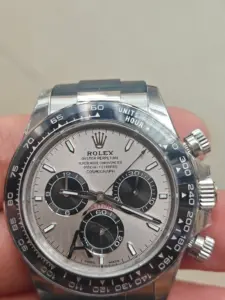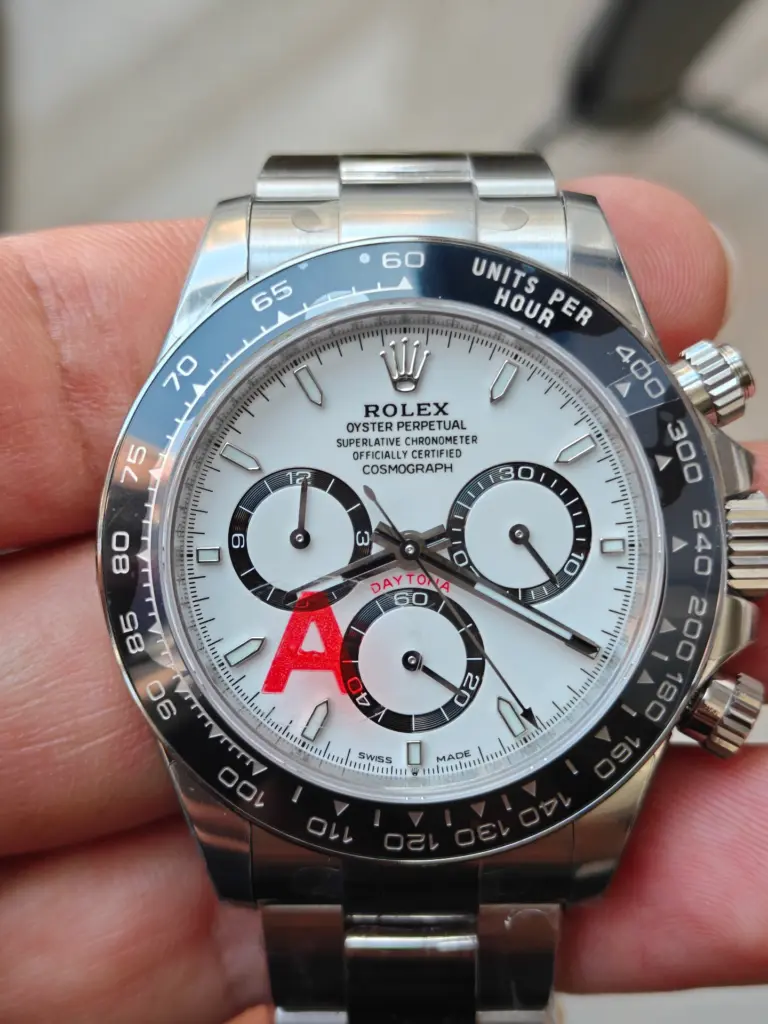
The Rolex Daytona Panda is one of the most closely watched models in the replica watch market. Based on hands-on observation and industry-measured data, this article systematically covers the VSF V3 release — from specifications, dial craftsmanship, clasp details and movement performance to chronograph function verification — and outlines a multi-point authentication framework. This article is for technical review and knowledge-sharing purposes only and does not constitute any purchase recommendation.
Introduction: Why the Panda Daytona Deserves Repeated Study
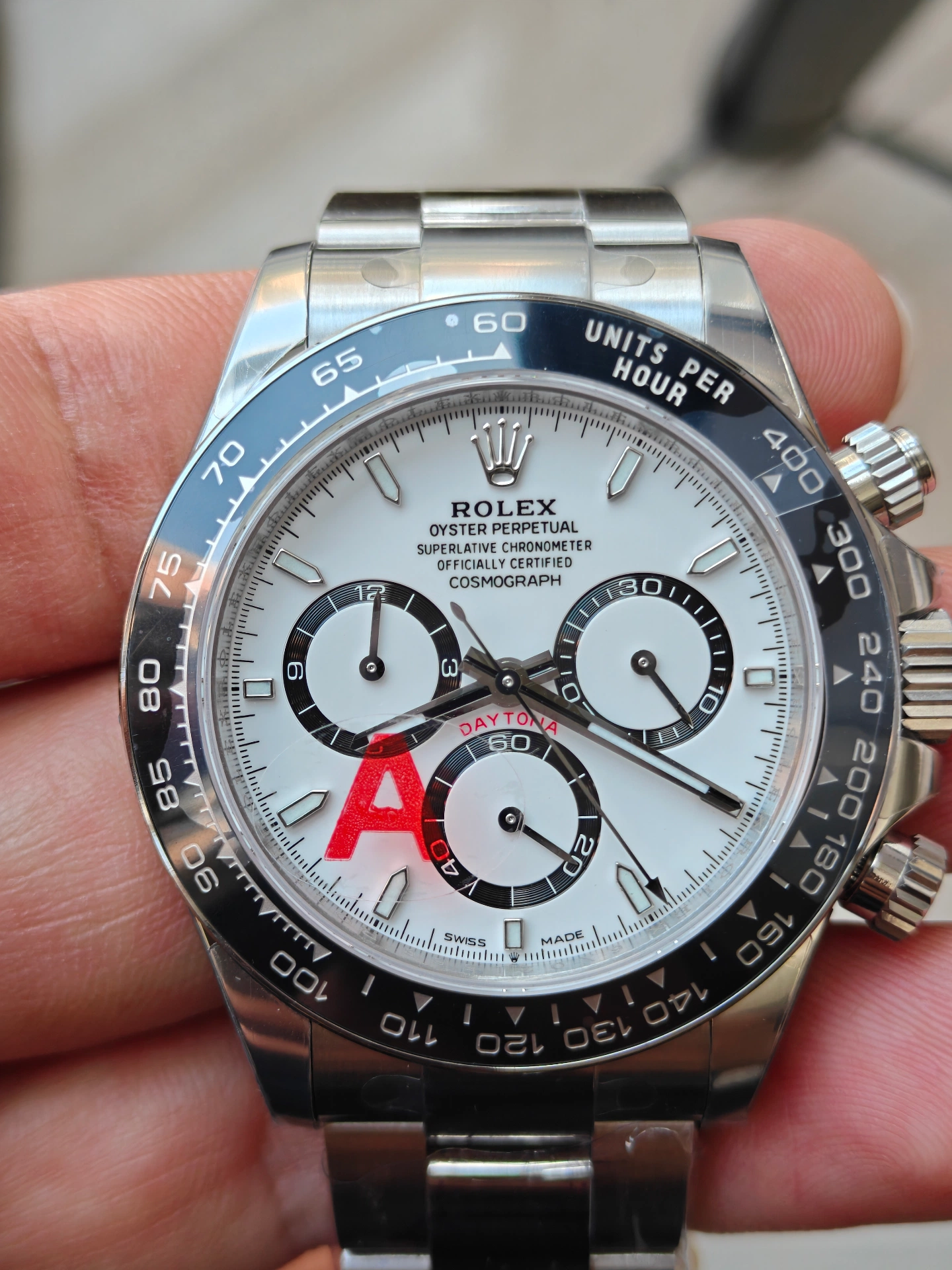
The Panda Dial of the Rolex Cosmograph Daytona — a white dial with black sub-dials — is a classic icon in the history of watch design. In the replica segment, the Panda Daytona is likewise one of the most fiercely contested niches, with several factories (VSF, AIF, Kingpas, BT, etc.) producing their own versions. Among them, VSF has earned a reputation as the technical benchmark of this series, thanks to its overall level of craftsmanship in the Daytona line.
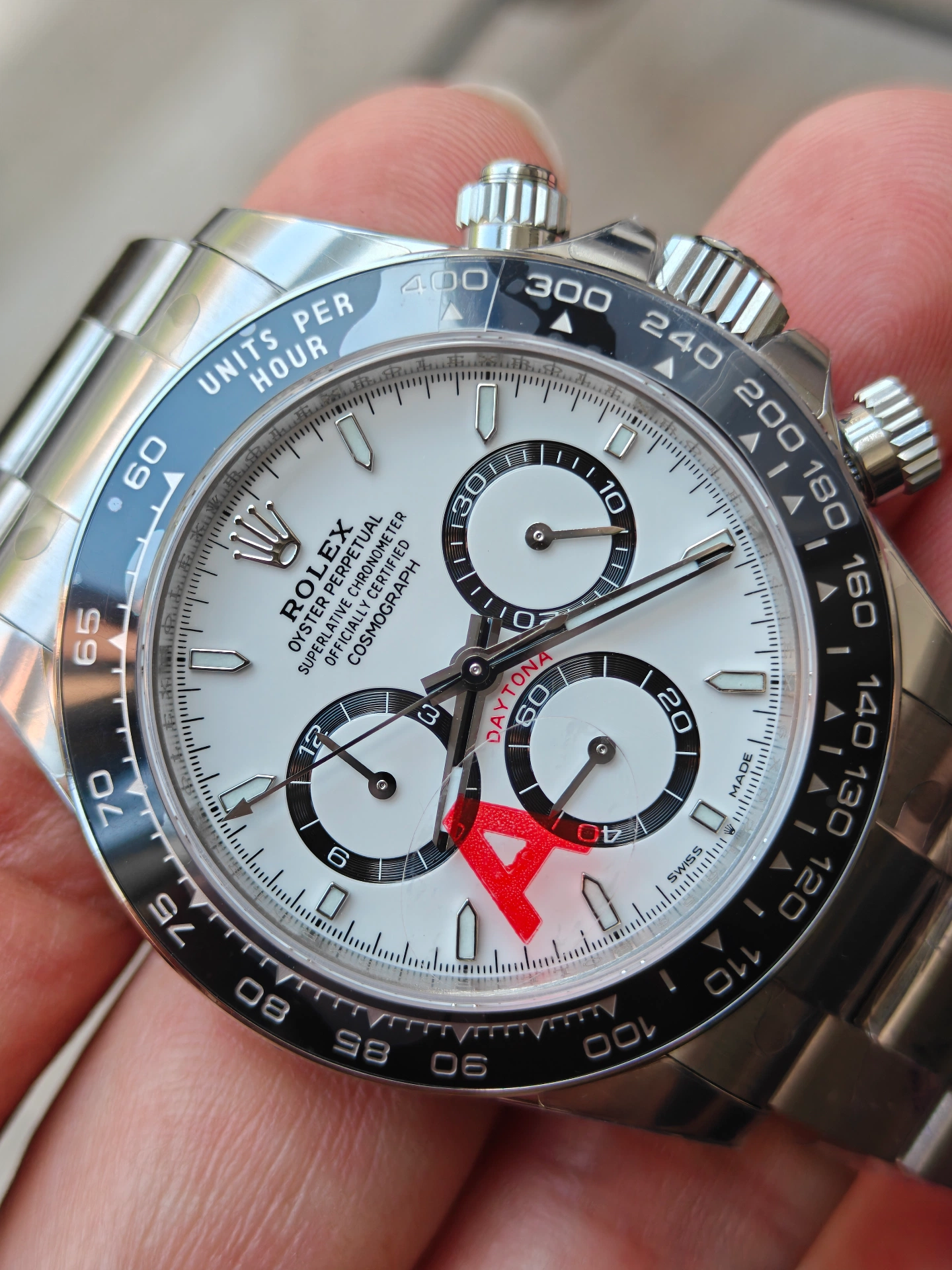
This review focuses on the VSF V3 release (powered by the Dandong 4131 movement). Drawing on hands-on measurements, it walks through the exterior specs, dial details, bezel and bracelet, clasp, movement and chronograph functions, and provides actionable multi-point authentication methods.
Specifications: the Nominal vs. Measured Difference is a Genuine Trait
Based on measured data from our knowledge base, the core specifications of the VSF V3 Panda Daytona are as follows:
| Parameter | Nominal | Measured | Notes |
|---|---|---|---|
| Case diameter | 40mm | 38.9mm | Standard Rolex practice: nominal exceeds measured |
| Thickness | — | 12.1mm | Tolerance ±0.1mm |
| Weight | — | 141–142g | Oyster bracelet version, tolerance ±2g |
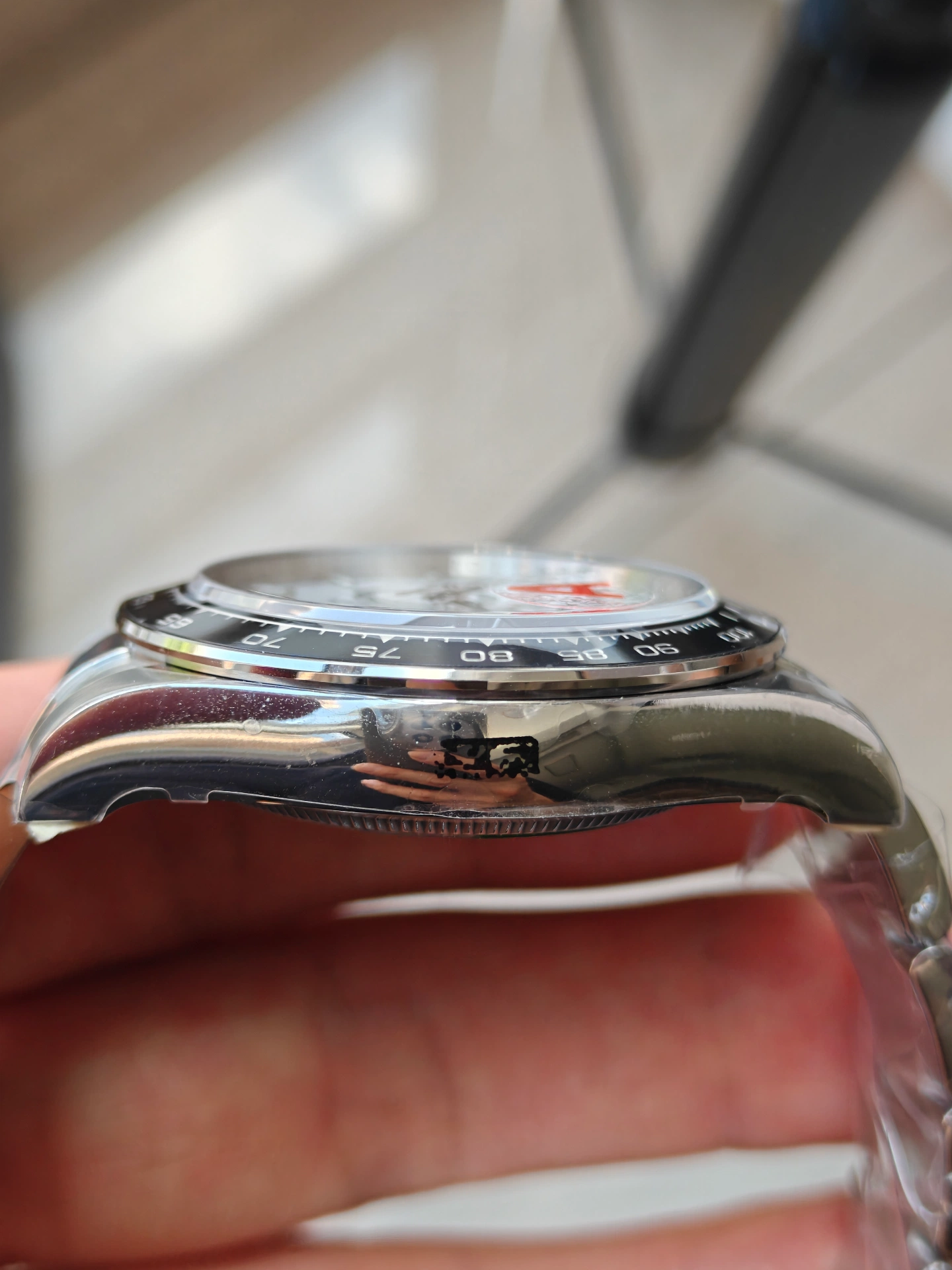
It should be noted that a nominal case diameter of 40mm measuring 38.9mm is perfectly normal — genuine Rolex watches behave the same way (the Datejust, for instance, is nominally 41mm yet measures in the high-39mm range). This is the brand’s habitual sizing convention, not a replica flaw. Conversely, if a piece measures a true 40mm, or deviates excessively (above 39.5mm or below 38mm), that is actually a cause for caution.
The 141–142g weight is a key reference figure for the VSF V3 Panda Daytona; a deviation too large (below 135g or above 148g) usually indicates a different version or a non-VSF product. The case diameter is measured without the crown and refers to the case body diameter.
Dial Craftsmanship: 3D Relief Lettering and Fine Printing
The VSF Panda Daytona’s dial printing is among the best in the industry. The most telling feature is the distinct 3D relief effect of the dial lettering, particularly the red elements (sub-dial hands, scale markers, etc.), where the raised effect is even more pronounced. Under a loupe, the edges of the lettering are crisp and sharp, with no blurring, burrs or bleeding ink; inferior versions, by contrast, tend to have flat, lifeless lettering and rough printing.
In terms of alignment, the Daytona line is the best-aligned series among Rolex replicas:
- 12 o’clock coronet: the crown’s axis should align with the center of the crown engraved on the rehaut. Note that the Daytona’s crystal is fairly thick, so viewing angle can create slight visual offset — a straight-on view is the most accurate. The Daytona’s alignment is generally better than that of the Submariner and Datejust lines
- Hour marker alignment: markers at 7–11 o’clock align with the letter R on the rehaut, and 1–5 o’clock with the letter X, with consistent overall alignment
- Hand center post: a solid center post with a domed cap (hat shape), not a hollow tube; hand edges are smooth with no burrs or raggedness
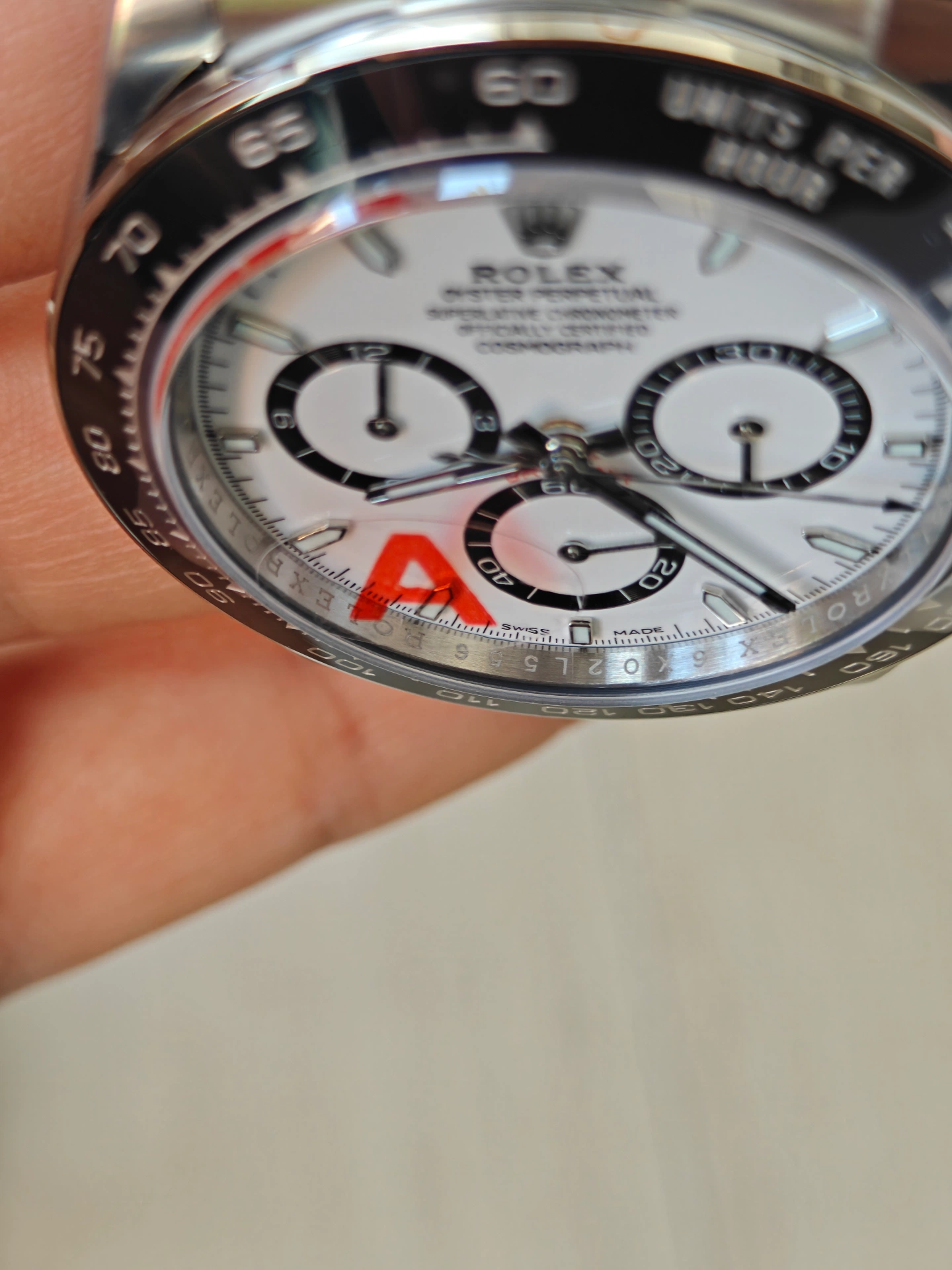
These alignment relationships are routine surface-level checks and should be examined under a loupe in good light.
Clasp Details: Coronet Logo, Double Flat-Top A and Batch Code
The clasp is a key area for authenticating the VSF Panda Daytona:
- Coronet logo (crown mark): clearly engraved and visible
- Flat-top A: both letter A’s on the clasp have flat tops (not pointed). On some batches a loupe is needed to see it clearly, but the “flat top” is a required accuracy feature
- Clasp code: the current batch uses the RP9 code (previously M5X). Codes change with production batches, so memorizing a single code as the sole criterion is not reliable
- Three small dots: three tiny dot markers should sit below the clasp code
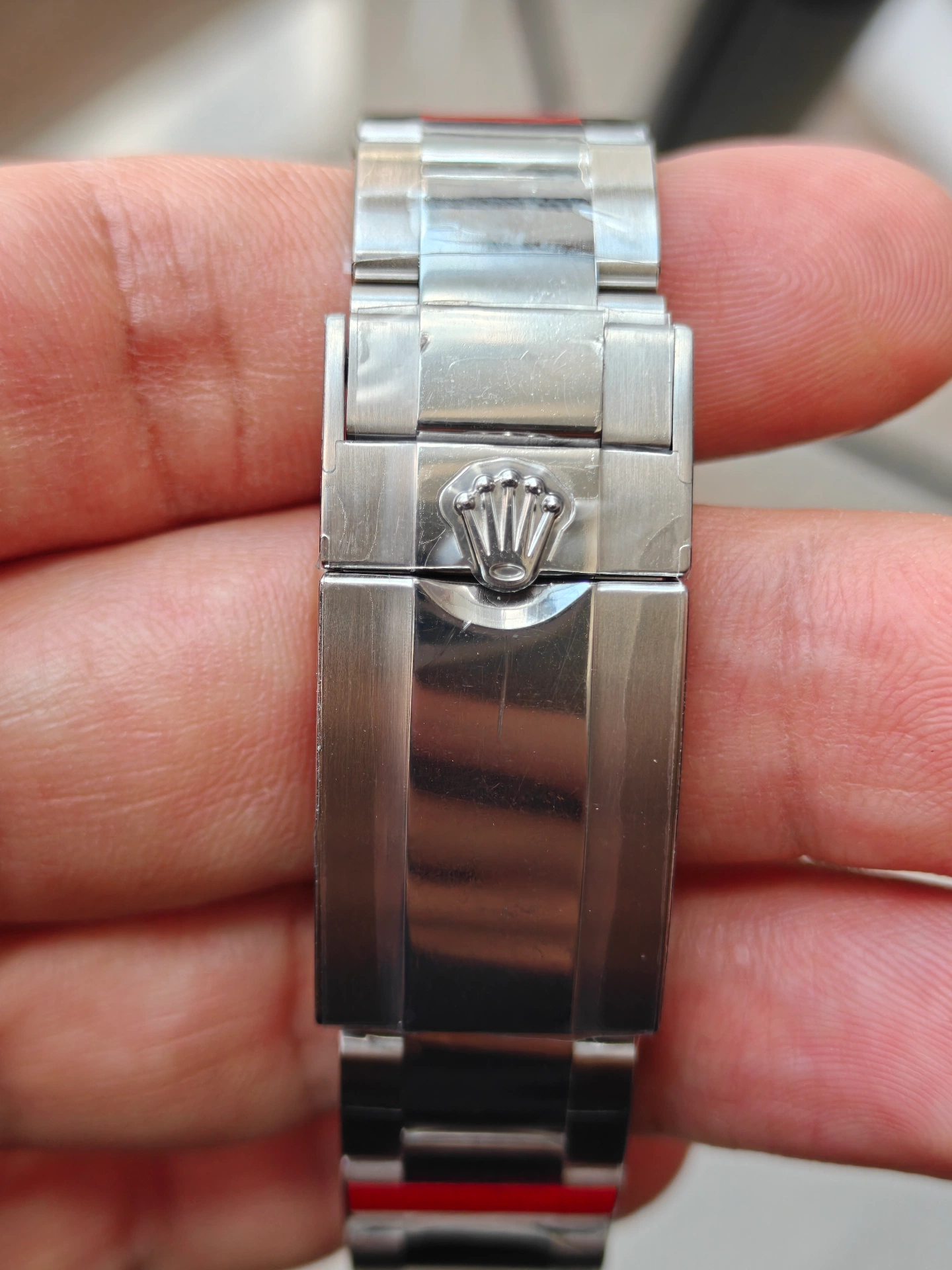
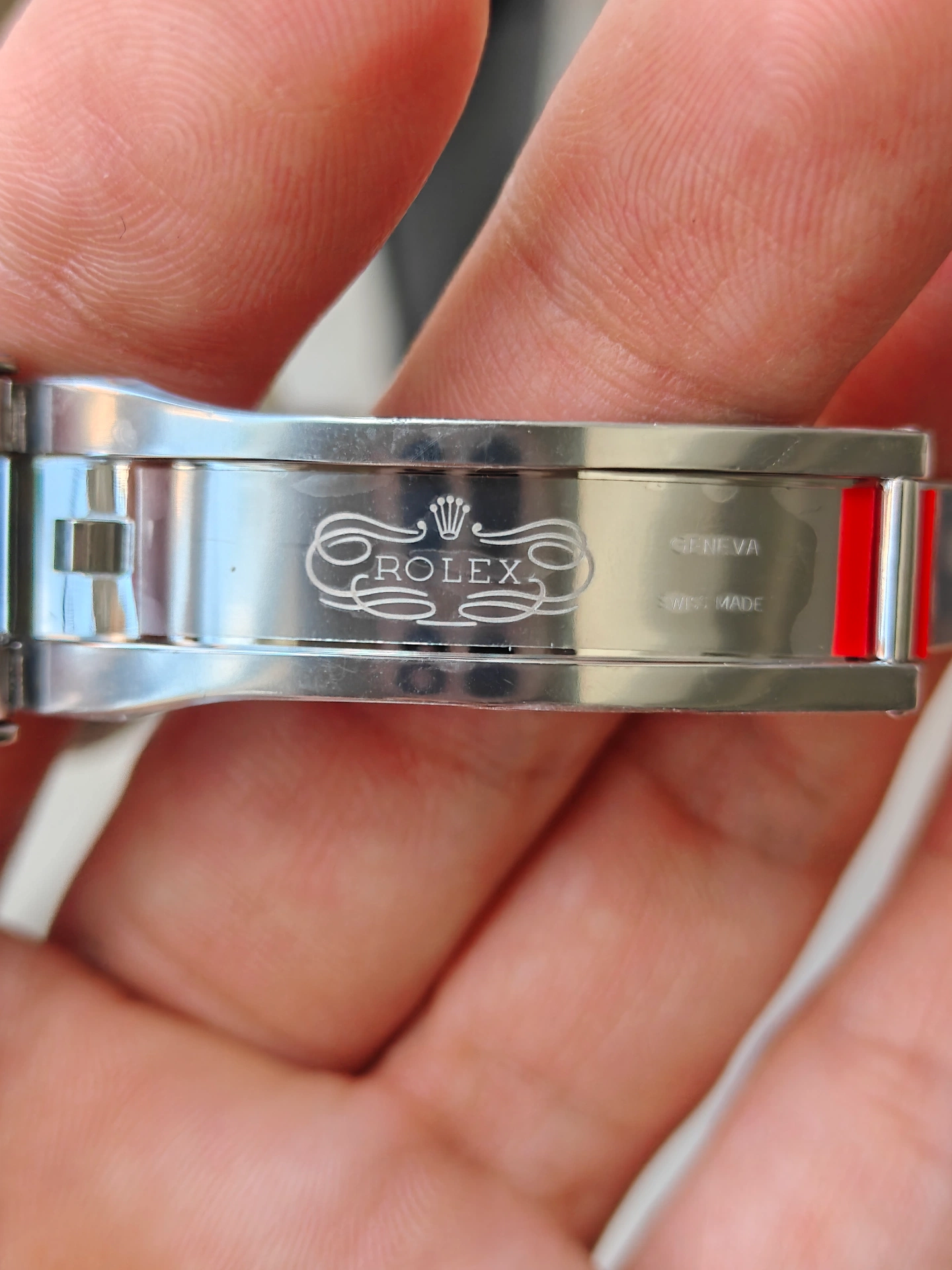
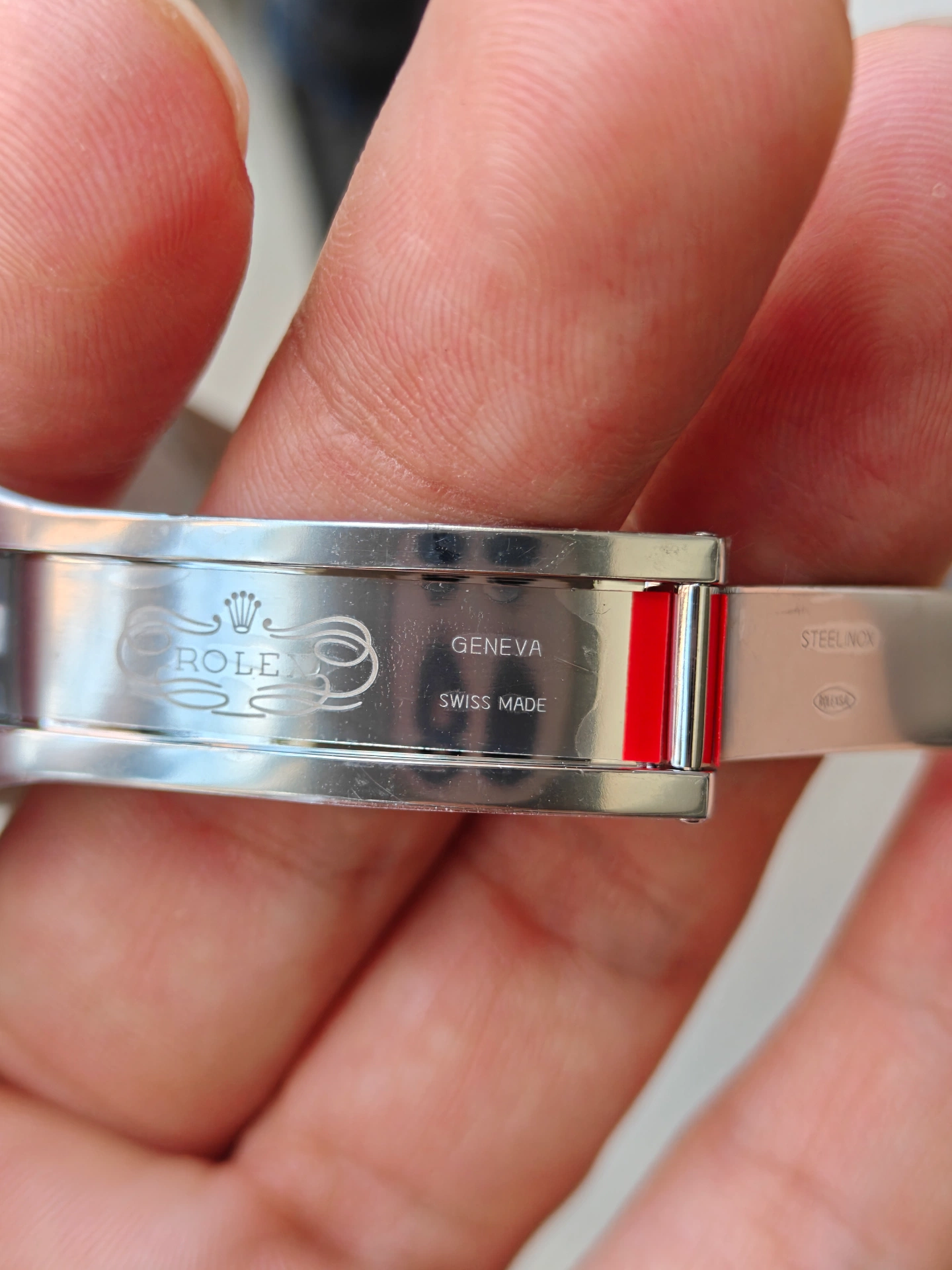
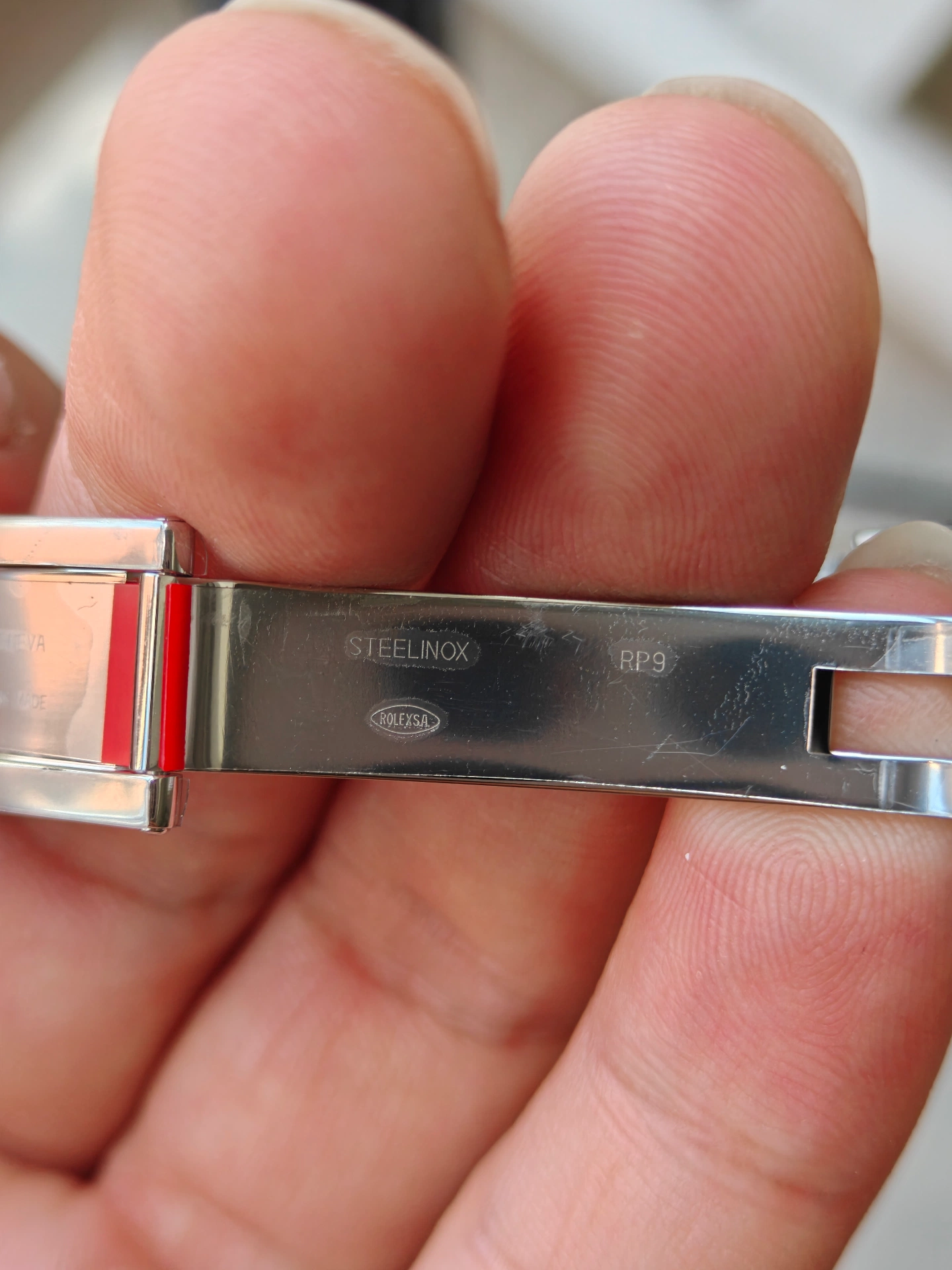
In addition, the bracelet features the Easylink extension system with three adjustment positions: pulling it out adds roughly 0.5cm of bracelet length, while pushing it back removes 0.5cm. Wearers with wrists over 20cm may need one or two extra links.
Case-to-Bracelet Junction: Gap and Height Traits
The junction between the VSF Panda Daytona’s bracelet and the case body shows tight, even gaps on both sides, with no oversized openings. A noticeably large gap is usually a sign of poor factory QC, or a lower-quality version from another factory — the result of insufficient mold precision or sloppy assembly.
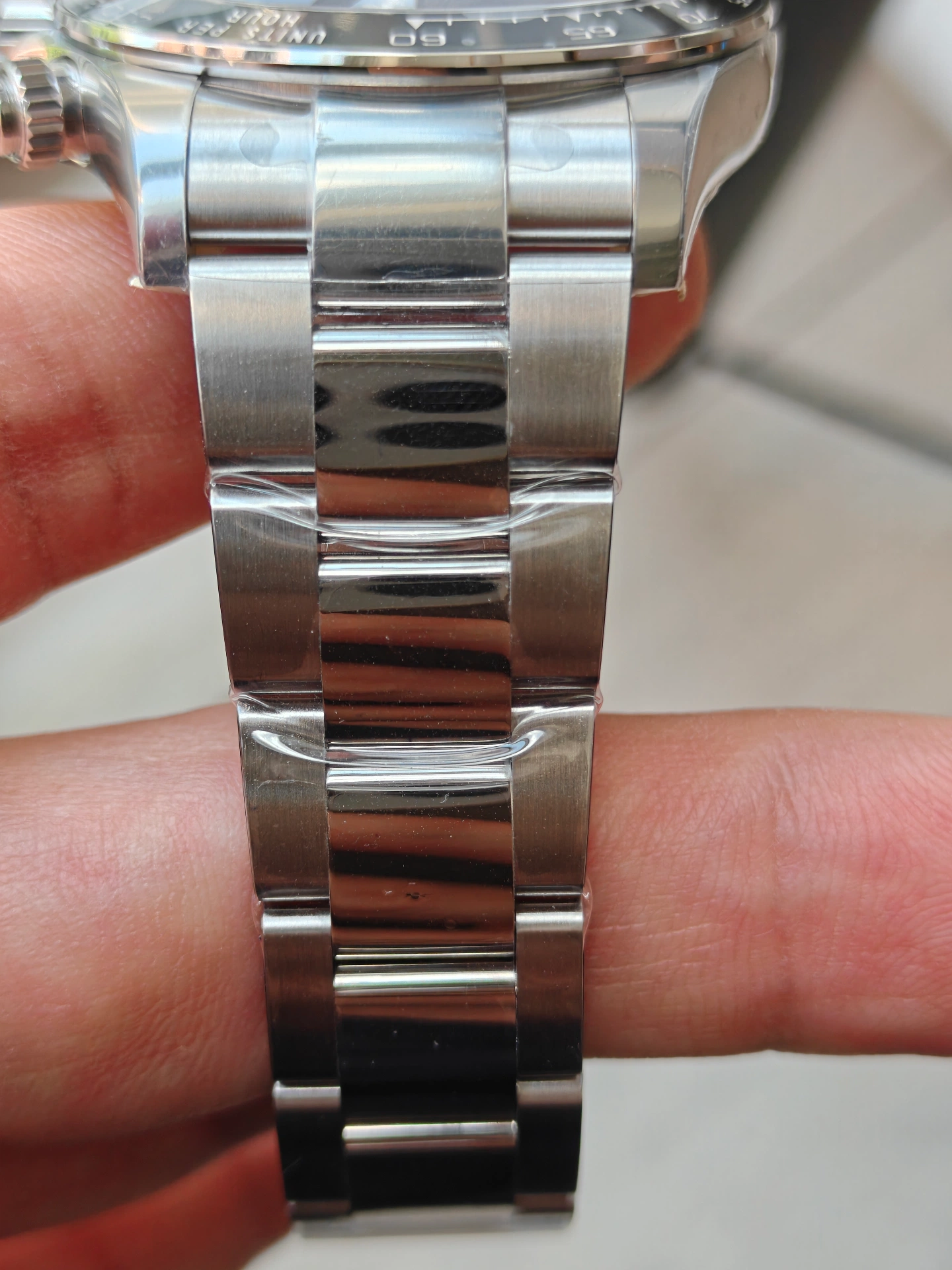
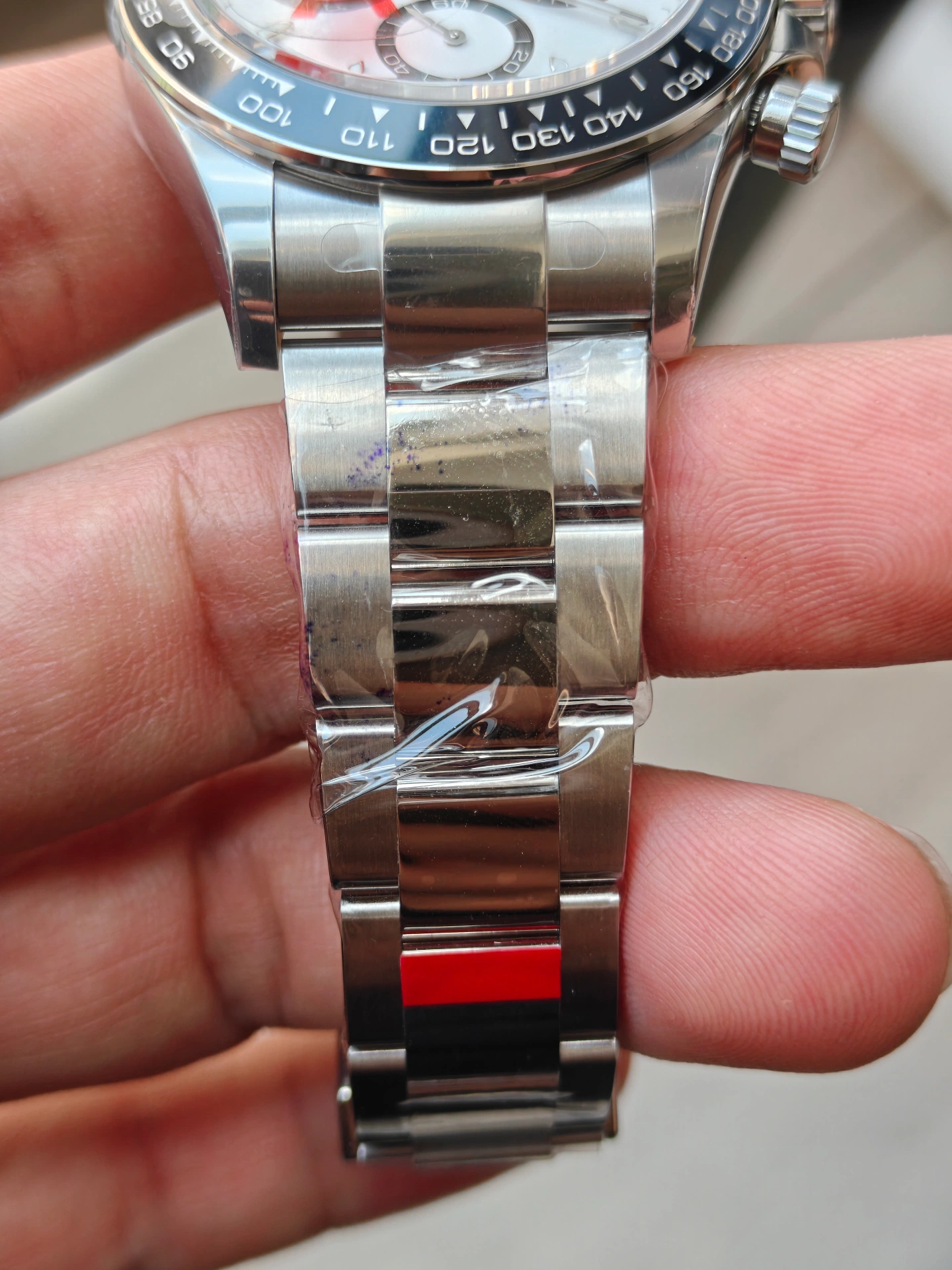
One important height trait: the case body of the Panda Daytona always sits higher than the bracelet attachment point, on both sides. This “case higher than bracelet” design trait can assist authentication.
Movement Breakdown: the Dandong 4131
The VSF V3 Panda Daytona is powered by the Dandong 4131 movement, one of the most thoroughly validated movements on the market with a very low return rate. Regarding the distinction between the 4131 and the earlier 4130, the knowledge base highlights two quick visual differences:
| Trait | Dandong 4131 (Panda Daytona) | Dandong 4130 (Ice Blue Daytona V2, etc.) |
|---|---|---|
| 6 o’clock position | Small crown engraving | No small crown |
| Bezel protection | Metal guard ring around the outer ring | No metal guard ring, plain ceramic bezel |
| Reliability | Well market-validated | Well market-validated |
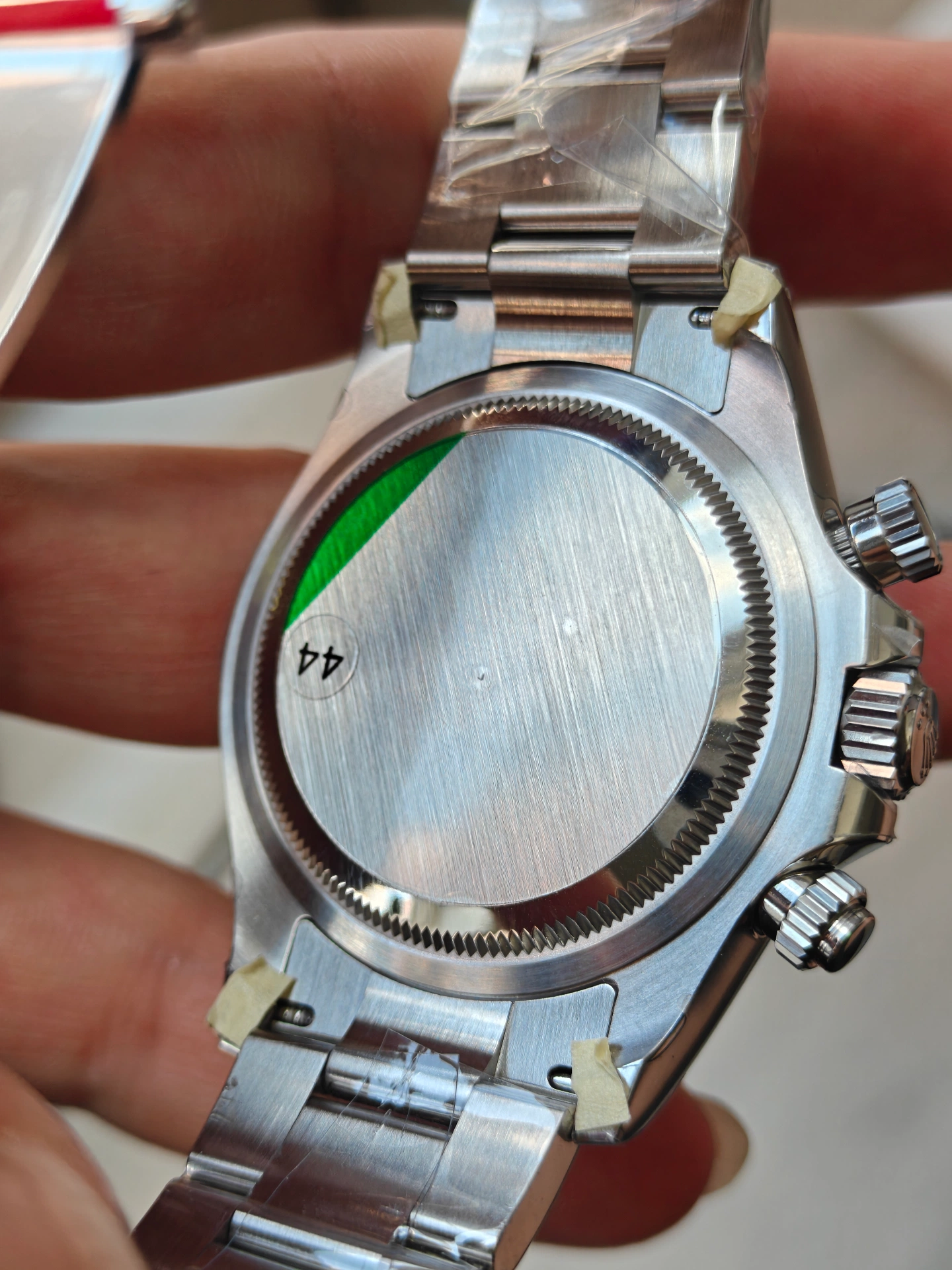
It is worth emphasizing that both movements are extremely reliable — the 4131 is not “superior” to the 4130; they simply differ in design. When identifying the movement, the 6 o’clock small crown and the metal guard ring are two quick visual cues, but the conclusion should combine multiple dimensions: weight, dimensions, chronograph function, and the clasp.
Function Verification: Chronograph Operation and Register Behaviour
The Panda Daytona is a chronograph with no date function and a single crown position (after unscrewing, you go straight to time-setting). Winding uses a screw-down crown: unscrew counter-clockwise, then wind clockwise, reaching a full wind in roughly 30–40 turns.
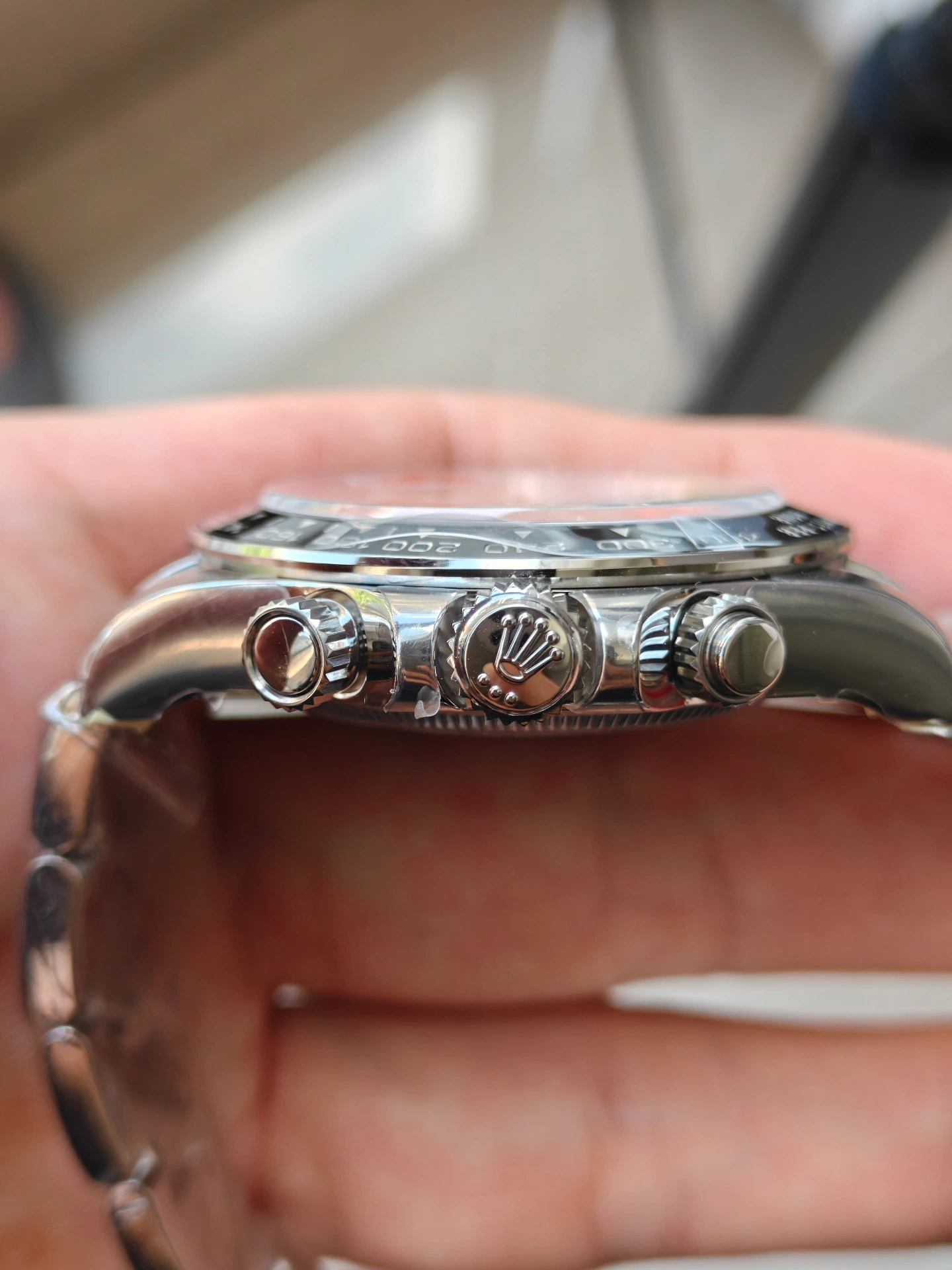
Verifying the chronograph is the core hands-on step for authenticating the VSF Panda Daytona:
Correct operating sequence: Start (2 o’clock pusher) → Stop (4 o’clock pusher) → Restart (2 o’clock pusher) → Reset (press the 4 o’clock pusher while stopped). The reset button cannot be pressed while the chronograph is running — you must stop it first, then reset. Forcing it while running can damage internal movement parts.
Register behaviour (important authentication points):
- 30-minute register (9 o’clock): jump-style motion — every time the chronograph seconds hand completes one lap (60 seconds), the 30-minute register jumps one step (1 minute). It does not sweep progressively
- 12-hour register (12 o’clock): after the 30-minute register completes two laps (60 minutes), the 12-hour register jumps directly one large step (1 hour)
- If the 30-minute or 12-hour register moves “slowly” in a progressive sweep, it is inaccurate
Reset to zero: after stopping, pressing reset returns the chronograph seconds hand to 12 o’clock, the 30-minute register to 30 (zero position), and the 12-hour register to 12 o’clock — all three hands return to zero properly.
These fully functional, original-matching chronograph features are characteristic of VSF’s top-tier version. If the chronograph is incomplete or fails to reset properly, be wary of a non-VSF version.
Market Status and Factory Sticker Notes
According to our knowledge base, the VSF Panda Daytona has been in long-term shortage and high demand for two to three months, with only very small batches released during that period. So if you see large quantities of “VSF Panda Daytona” in stock, there is a good chance they are not from the VSF factory; be cautious when a seller claims to have “large stock of VSF Panda Daytonas.” The shortage reflects the overall situation at VSF (hot models like the Sprite GMT and white-gold Yacht-Master are also rarely shipped), and is not an issue specific to any one dealer.
One common misconception should be clarified: the “A” on VSF’s factory sticker does not indicate a quality grade. The Daytona/Panda line uses A stickers merely as a factory marking convention (the GMT line uses a 3A mark with three A’s). The number of stickers says nothing about quality or version level and should not be used as a criterion.
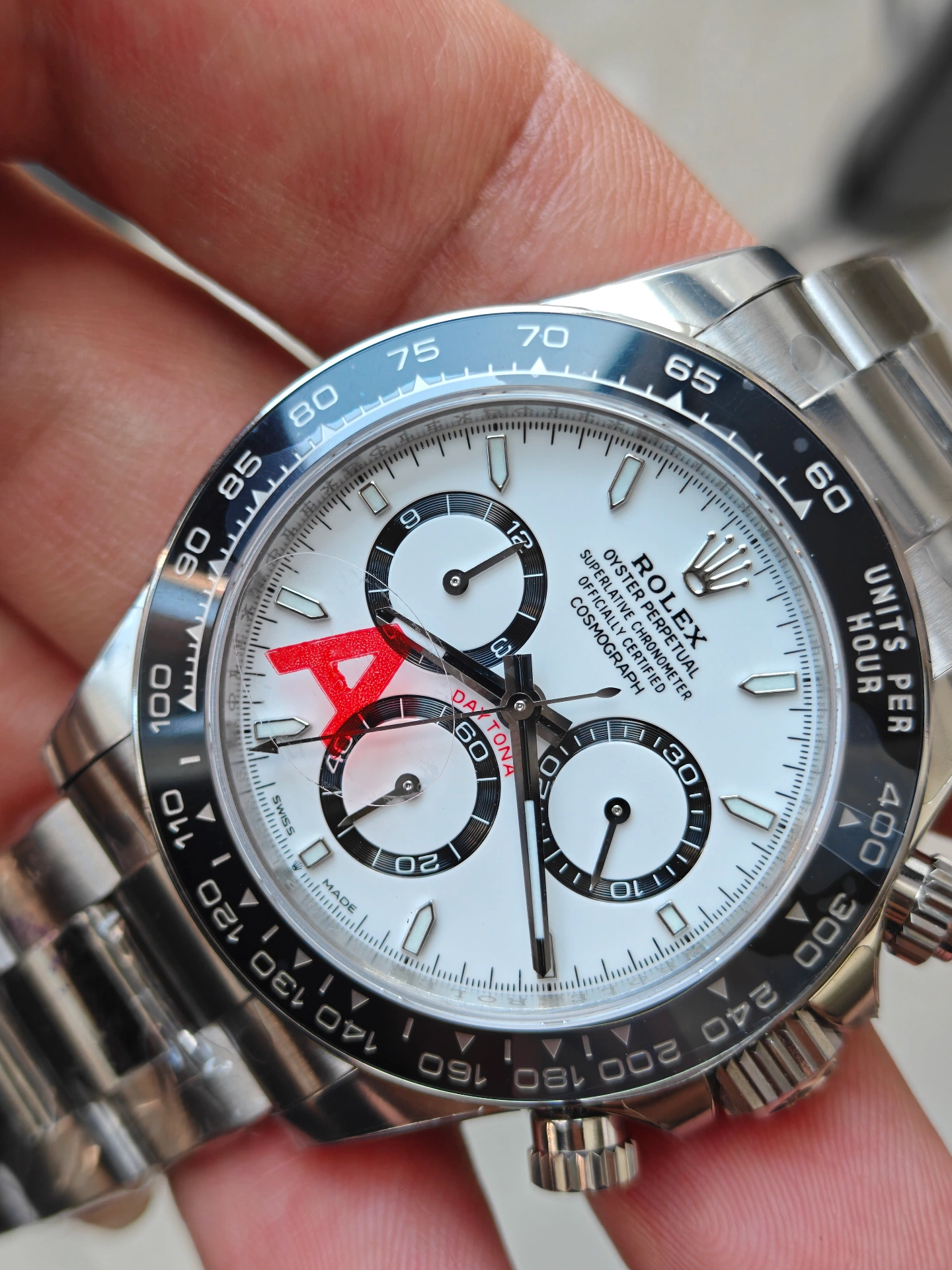
Dial White Differences Across Factories
The dial whites of different factories’ Panda Daytonas differ subtly: AIF’s dial leans whiter with a cooler tone, while VSF’s is also white but warmer overall. These are subtle differences that are hard to spot in isolation unless compared directly against the genuine article or a VSF side by side, so they should not be used as the sole criterion.
Authentication Checklist
Consolidating the above, here is the multi-point authentication checklist for the VSF V3 Panda Daytona:
- Hard specs: measured case diameter 38.9mm (nominal 40), thickness 12.1mm, weight 141–142g (Oyster bracelet, ±2g)
- Dial: 3D relief lettering (more pronounced on red elements), 12 o’clock coronet alignment, 7–11 o’clock align R / 1–5 o’clock align X
- Hands: solid center post (domed cap), no burrs or ragged edges
- Clasp: clear coronet logo, double flat-top A, current RP9 code, three small dots below the code
- Bracelet: three-position Easylink, case sits higher than bracelet, tight even junction gaps
- Movement: Dandong 4131, 6 o’clock small crown, metal guard ring
- Chronograph: jump-style 30-minute register, direct-jump 12-hour register, three-hand zero reset, reset button locked while running
- Overarching principle: verify across multiple dimensions — never conclude from a single trait
FAQ
Q1: What movement does the VSF Panda Daytona use?
The VSF V3 Panda Daytona uses the Dandong 4131 movement, featuring a small crown at 6 o’clock and a metal guard ring around the outer ring. It has been well validated by the market over the long term with a low return rate.
Q2: How do I tell the Dandong 4131 from the 4130?
Two quick differences: the 4131 has a small crown at 6 o’clock and a metal guard ring; the 4130 has no small crown and no metal guard ring (plain ceramic bezel). Both are highly reliable — they just differ in appearance.
Q3: What does the VSF Panda Daytona actually measure in case diameter?
Roughly 38.9mm measured, nominally 40mm. Nominal exceeding measured is standard Rolex practice — genuine watches behave the same way, so this is normal.
Q4: How do I verify the VSF Panda Daytona’s chronograph?
Start with the 2 o’clock pusher, stop with the 4 o’clock pusher, then reset with the 4 o’clock pusher after stopping. The reset button being locked while the chronograph runs is a normal trait (stop first, then reset); the 30-minute register jumps rather than sweeping.
Summary
The VSF V3 Panda Daytona (116500), with the stable Dandong 4131 movement and well-executed finishing details, holds a benchmark position among replica Daytonas. The specifications, dial/clasp/bracelet traits, movement differences and chronograph verification methods outlined here can serve as a reference framework for multi-dimensional authentication of this model. Note that no single trait is sufficient on its own — always combine the hard metrics with the craftsmanship details.
This article is for technical review and knowledge-sharing of replica watches only. All content is based on public information and hands-on observation and does not constitute any purchase recommendation. Replica watches raise intellectual property concerns; readers should make their own judgment and comply with applicable laws and regulations.