VSF Pepsi GMT-Master II (126710 BLRO) In-Depth Technical Review: Ceramic Bezel, Dandong 3285 Movement & Complete Authentication Checklist
Introduction
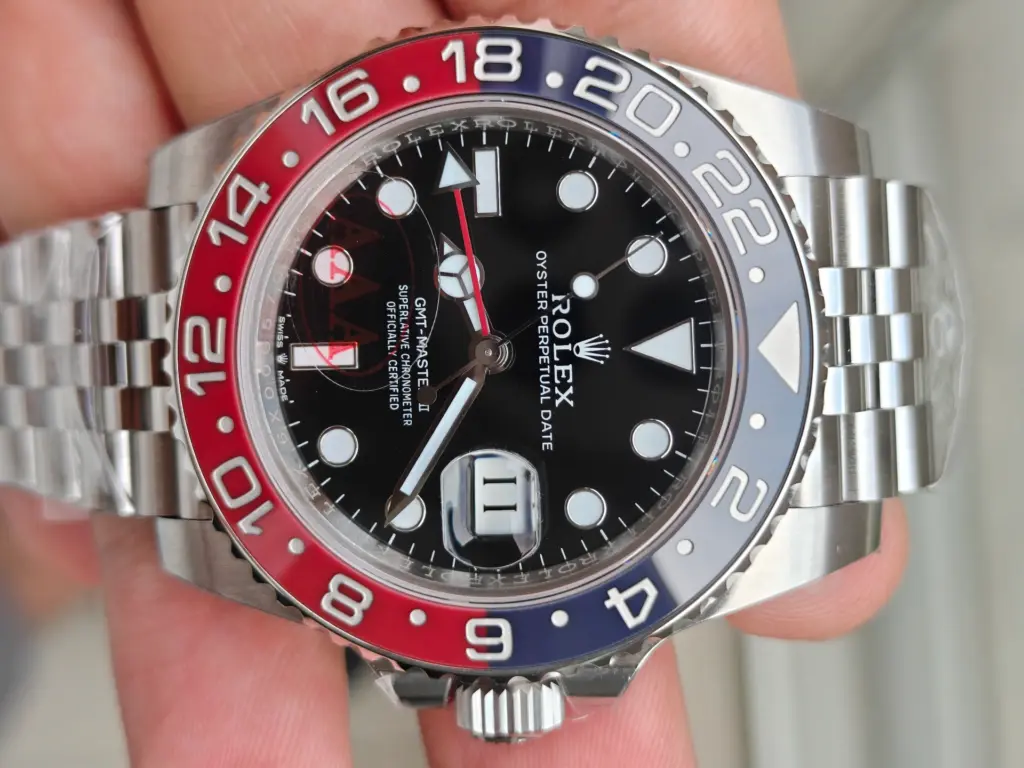
The VSF Pepsi (Rolex GMT-Master II 126710 BLRO, red-blue ceramic bezel) is widely regarded as the benchmark product among GMT-series replicas. This article provides a systematic technical breakdown based on hands-on observation, covering specifications, ceramic bezel craftsmanship, dial details, bracelet variants, clasp features, and the Dandong 3285 movement, along with actionable authentication methods.
VSF’s overall experience in the GMT series (Pepsi, Sprite) surpasses that of other top-tier replica factories — even when exterior specifications are similar, perceptible differences remain in bezel rotational feel, movement stability, and detail craftsmanship. This article is for technical review and knowledge sharing only and does not constitute any purchase recommendation.
Core Specifications: Jubilee vs Oyster Bracelet Variants
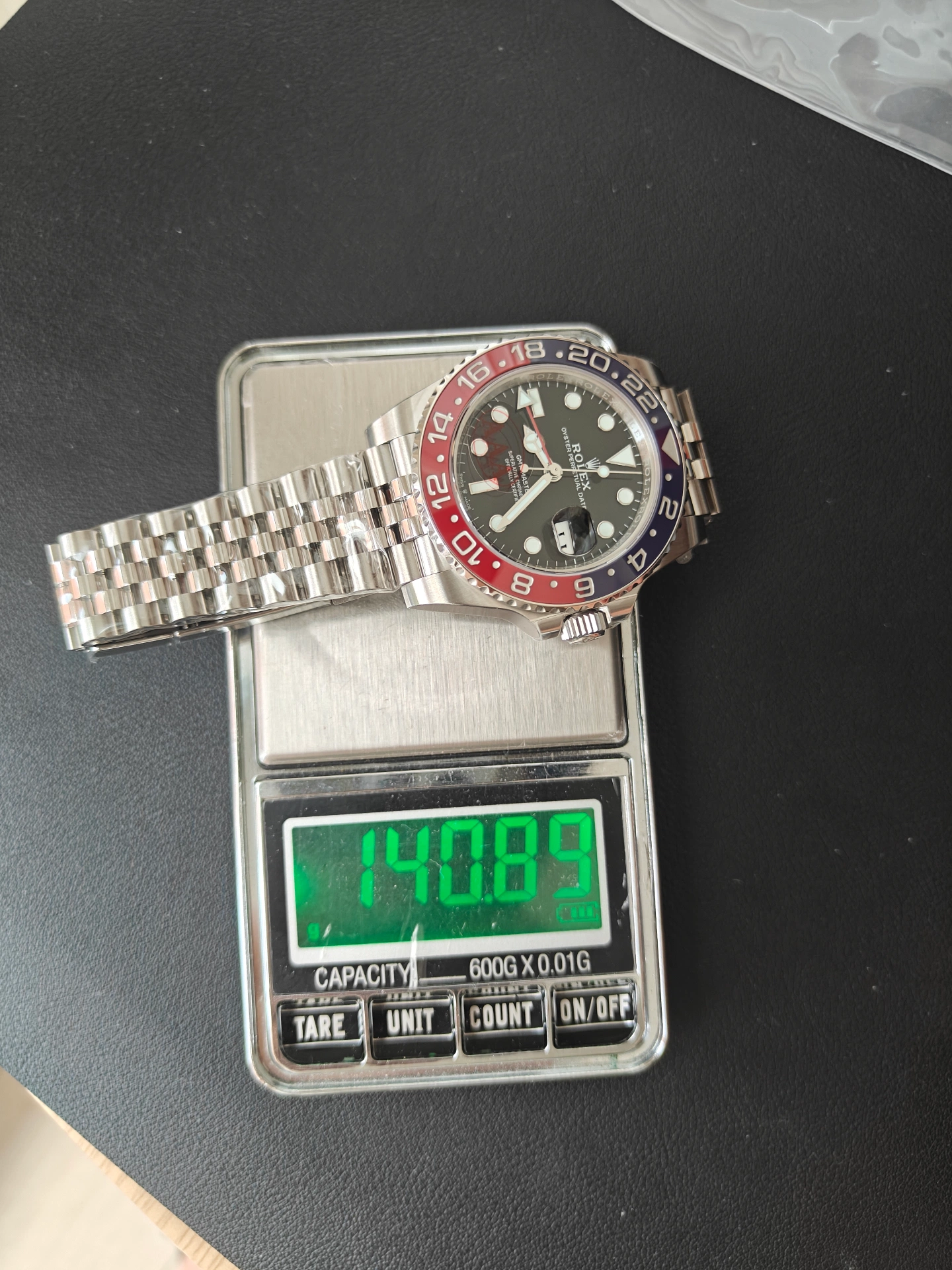
The VSF Pepsi is available in two bracelet versions — Jubilee and Oyster. The case, movement, bezel, and dial are identical; only the bracelet style and weight differ.
| Specification | Jubilee Version | Oyster Version |
|---|---|---|
| Case diameter | 40mm | 40mm |
| Thickness | 12.1mm | 12.1–12.2mm |
| Weight | ~140g | ~150g |
| Movement | Dandong 3285 | Dandong 3285 |
| Bezel | One-piece red-blue ceramic bezel | One-piece red-blue ceramic bezel |
| Clasp code (current batch) | A9A | 1NQ |
Weight is one of the most critical hard indicators. The Jubilee version should weigh around 140g, and the Oyster version around 150g — a difference of approximately 10g (the Oyster links are thicker and use more metal). A normal measurement tolerance of ±2g is acceptable, but if the weight deviates significantly (e.g., Jubilee below 130g or above 150g), a non-VSF version should be suspected. Always confirm the bracelet variant before weighing; do not judge an Oyster version against the Jubilee weight standard.
Ceramic Bezel Craftsmanship: The “Soul” of the Pepsi
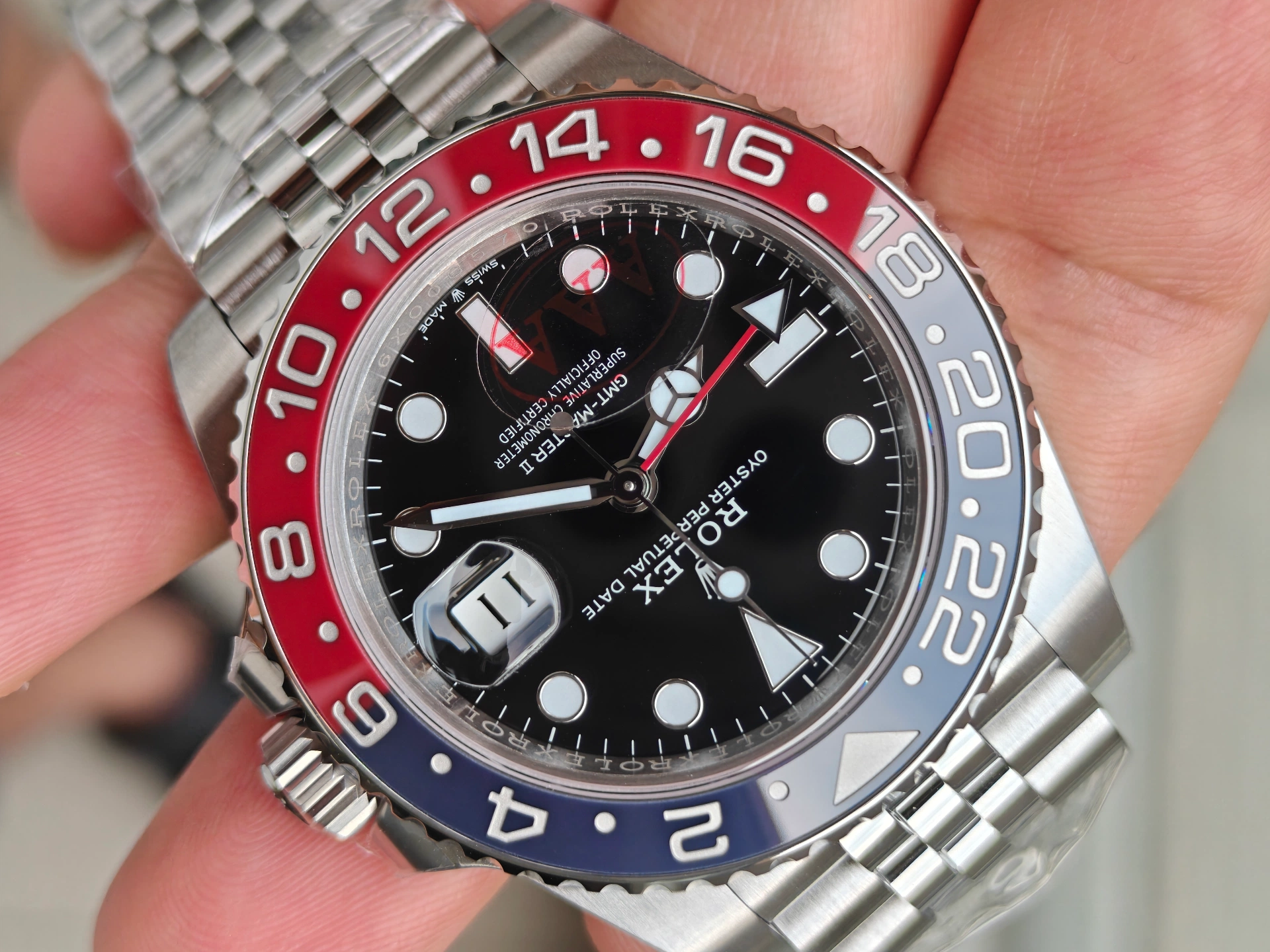
The bezel is the most technically demanding component of the GMT-Master II and the area where the gap between VSF and other factories is most pronounced. The VSF Pepsi features a one-piece red-blue dual-color ceramic bezel, not a post-assembly bonded construction.
One-Piece Firing and Color Purity
The red and blue colors of VSF’s ceramic bezel are fired together as a single piece, with a natural transition at the red-blue boundary and no visible seam. The colors are solid — pure blue and pure red — with no light-scattering particles mixed into the ceramic. An automotive paint analogy helps: VSF’s ceramic bezel is like solid white paint, uniform and pure; lower-quality versions are like pearl white paint, containing fine glitter particles that become visible under strong light.
Authentication procedure: Carefully inspect the blue and red areas under strong light (flashlight or direct sunlight). Solid-color ceramic will not show noticeable glitter changes; versions mixed with light-scattering particles will reveal fine glitter specks when rotated at different angles.
Effect of Lighting on Color Appearance
The color-shifting effect of the red-blue ceramic bezel varies under different lighting conditions: in strong daylight, the color shift appears less pronounced; in darker environments, the effect becomes very vivid. Ambient lighting significantly impacts bezel color appearance, so bezel color should not be judged solely under strong light — performance in low-light conditions better reflects craftsmanship quality.
Rotational Feel: Cannot Be Turned with One Finger, Distinct Clicks with Two
This is the most recognizable hands-on characteristic of the VSF bezel:
- Cannot be rotated with one finger: Attempting to turn the ceramic bezel with a single finger, a genuine VSF cannot be rotated or requires extreme effort — at least two fingers are needed.
- Distinct clicks: When rotated with two fingers, each step produces a clear “click” detent, advancing one position at a time.
- Both smooth and damped: Quick, firm pressure allows continuous rotation, but each detent still has a defined positional feel — it does not slide freely.
- Bidirectional rotation: Both clockwise and counterclockwise rotation are possible, with distinct clicks in both directions.
Bezel Feel Comparison: VSF vs Other Top-Tier Factories
Other top-tier replica factories may produce Pepsi bezels with similar exterior specifications, but the rotational feel shows a clear gap:
| Feature | VSF Factory | Other Top-Tier Factories |
|---|---|---|
| One-finger rotation | Cannot, requires two fingers | Effortless |
| Click resistance | Strong, distinct step-by-step | Weak, slides through |
| Smoothness | Both smooth and distinctly clicked | Overly smooth, no positional feel |
| Bidirectional rotation | Smooth with clear clicks | Rotatable but vague feel |
| Overall experience | Correct, close to genuine | Not quite correct |
The bezel rotation of other factories feels similar to a Yacht-Master platinum or Franck Muller Vanguard bezel — also bidirectional, but effortlessly rotatable, without strong detent resistance, sliding through with a single push. Bezel feel is one of VSF’s core competitive advantages and is difficult to replicate completely.
Dial Details
The VSF Pepsi dial is overall finely crafted; the following details require magnified inspection:
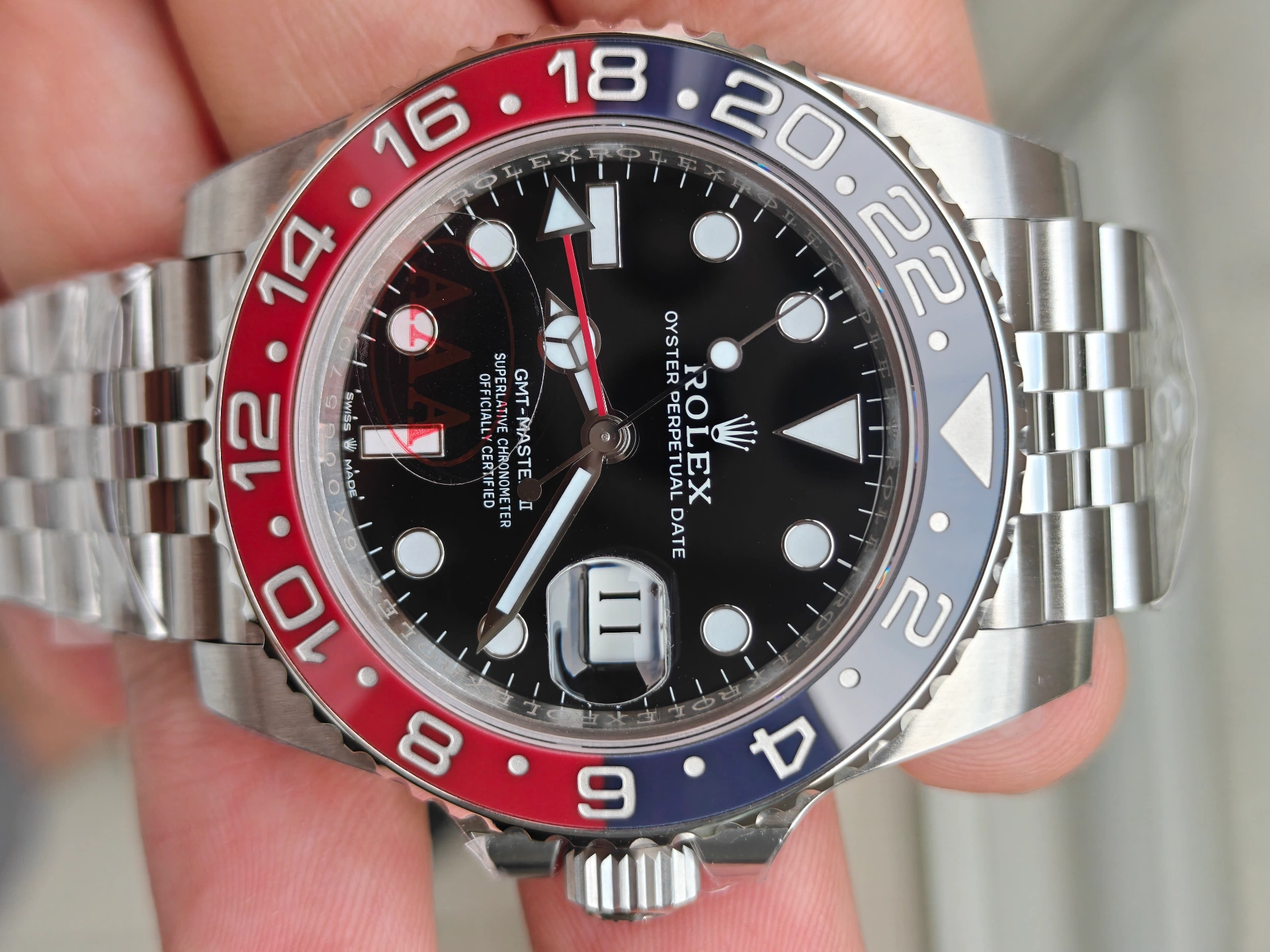
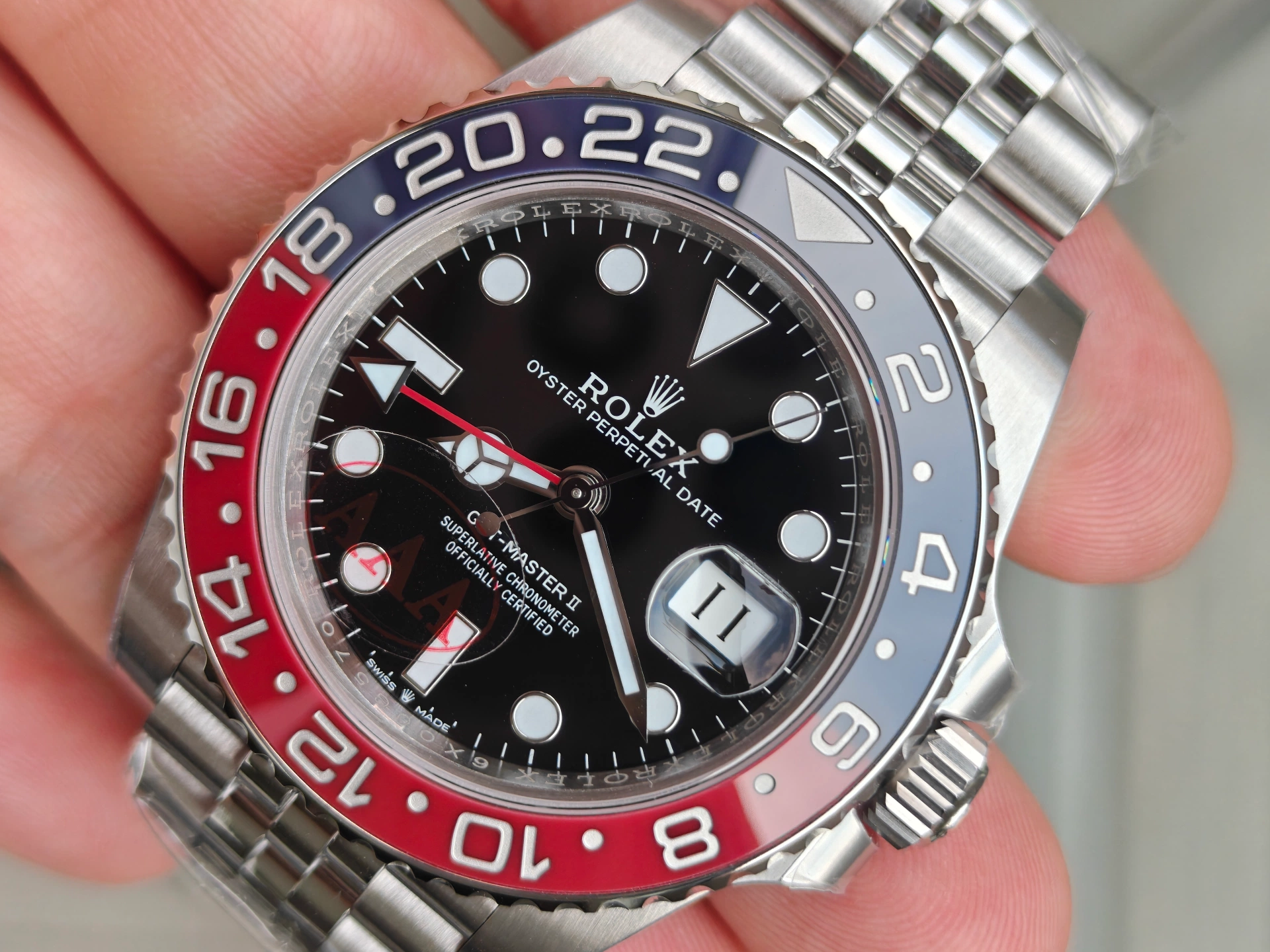
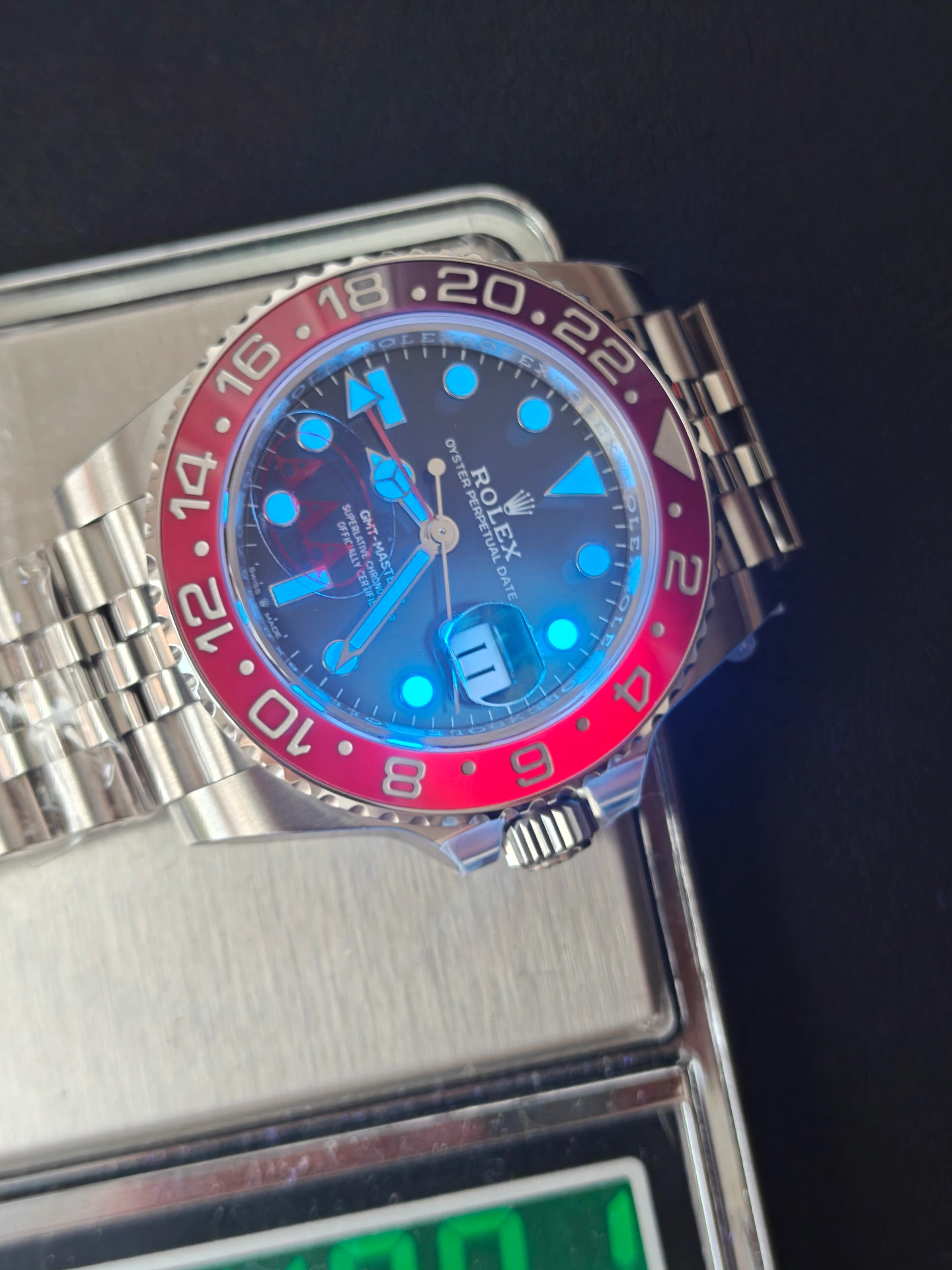
- Crisp, sharp engravings: The edges of hour markers and indices are sharp, free of burrs.
- Solid pinion: The hand center axis is solid (hat-shaped), not a hollow tube. Lower-quality versions may use a hollow pinion.
- Centered font: The date window font is centered, not offset left or right.
- Evenly applied luminescence: The Chromalight luminescent coating is uniformly applied, with no local dimness or missed areas.
During authentication, inspect each item above with a loupe. The solid pinion, engraving clarity, and centered font are the core verification points at the dial level.
Bracelet Variant Comparison: Jubilee vs Oyster
Variant Difference Explained
There is no essential difference between the Jubilee and Oyster bracelet versions — the bezel is the same, dial printing is the same, luminescence is the same, movement is the same (Dandong 3285), and the case is the same. The main differences lie only in bracelet style and clasp code. Neither bracelet variant is of higher quality; both are VSF products of the same quality standard.
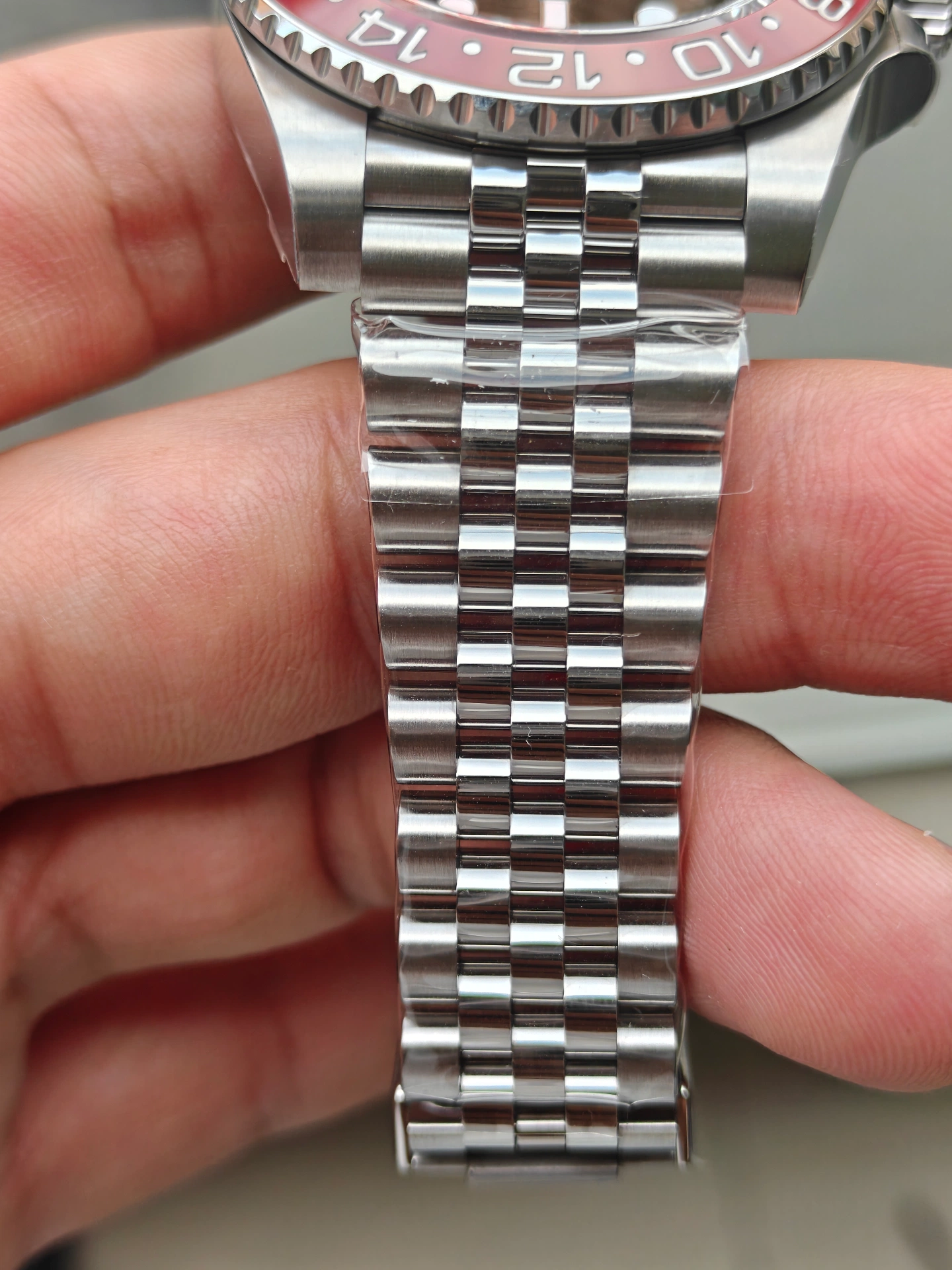
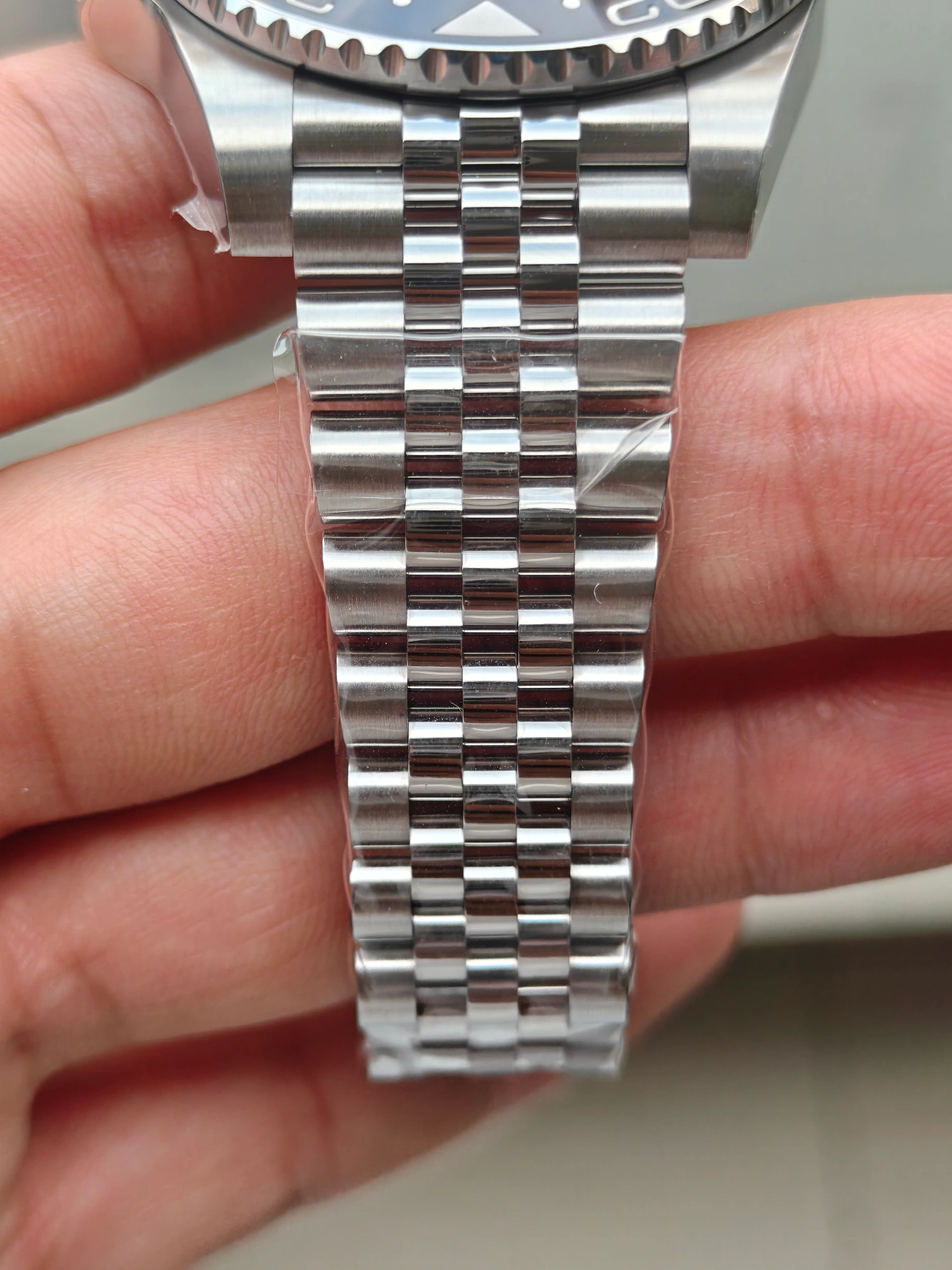
Jubilee Bracelet
- Five-row fine link design, wears with a more youthful feel
- Conforms to the wrist, high comfort
- Weight ~140g, approximately 10g lighter than Oyster
- Current batch clasp code: A9A
Oyster Bracelet
- Three-row link design, style leans mature and steady
- Thicker link structure, well-executed brushing and polishing
- Weight ~150g
- Current batch clasp code: 1NQ
Bracelet Gap Authentication
The gap at the bracelet-to-case junction is a direct reflection of machining precision. A genuine VSF has very small, very tight gaps, uniformly consistent on both sides. If the received watch has large, uneven gaps (one side larger than the other), or if the bracelet can be felt to wobble or have play when gently shaken, it is off-spec. Excessive gaps indicate insufficient mold precision or poor assembly craftsmanship.
Clasp Details
Dual-Opening Mechanism
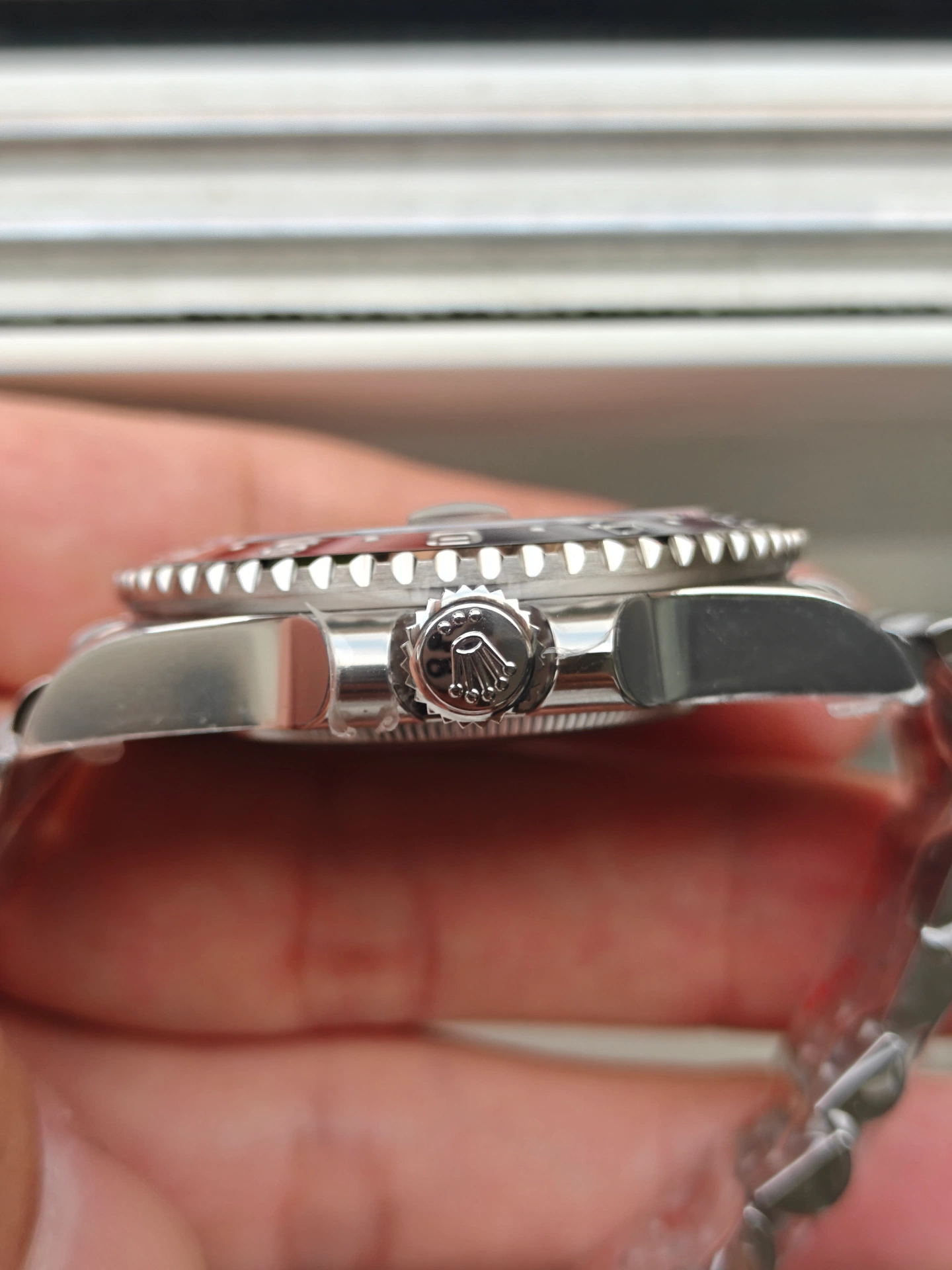
The VSF Pepsi clasp supports two opening methods: it can be opened from the front of the clasp, or by pressing the side button. The dual-opening design is a characteristic of Rolex Jubilee/Oyster clasps; both methods should function properly during testing.
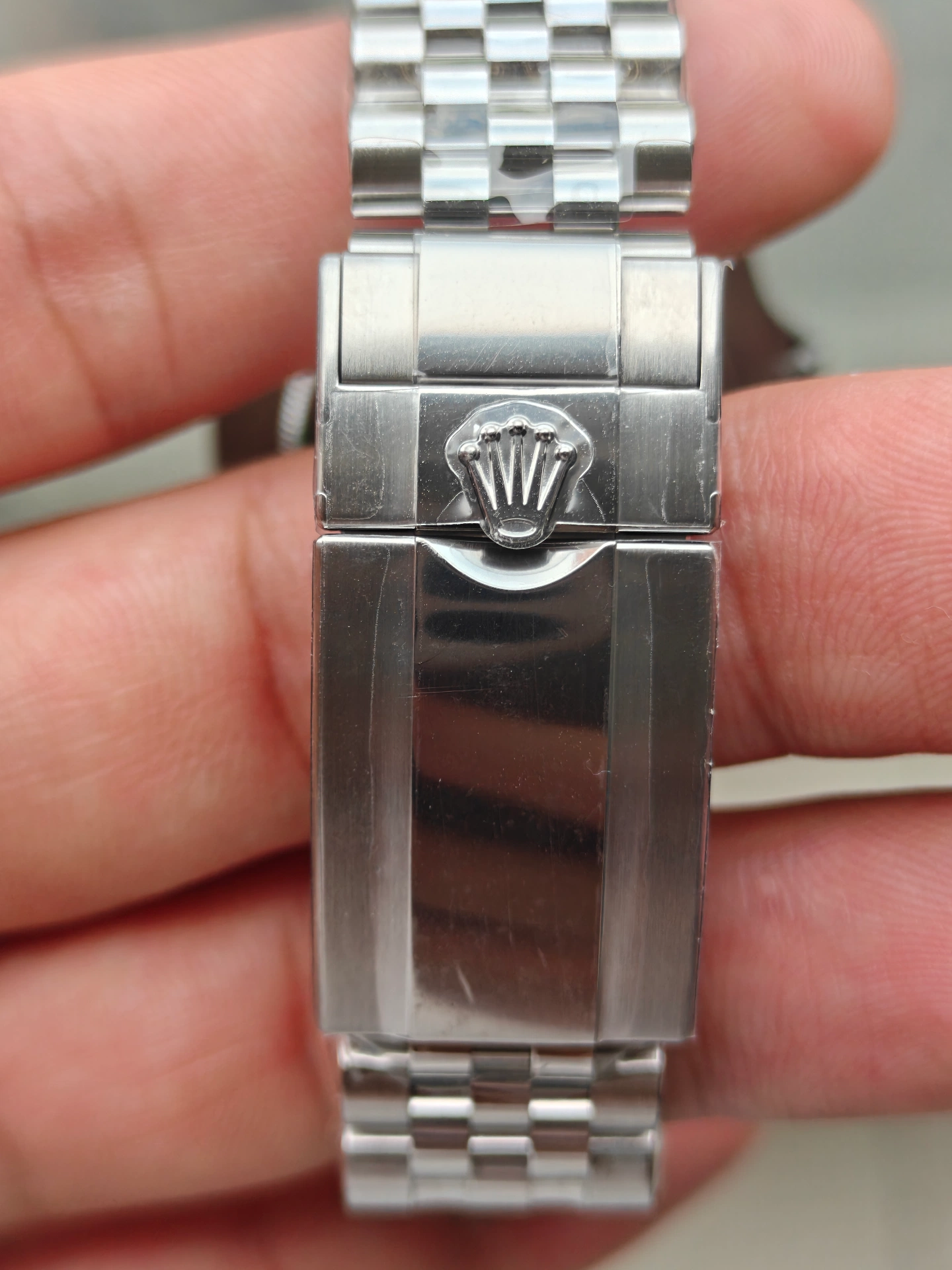
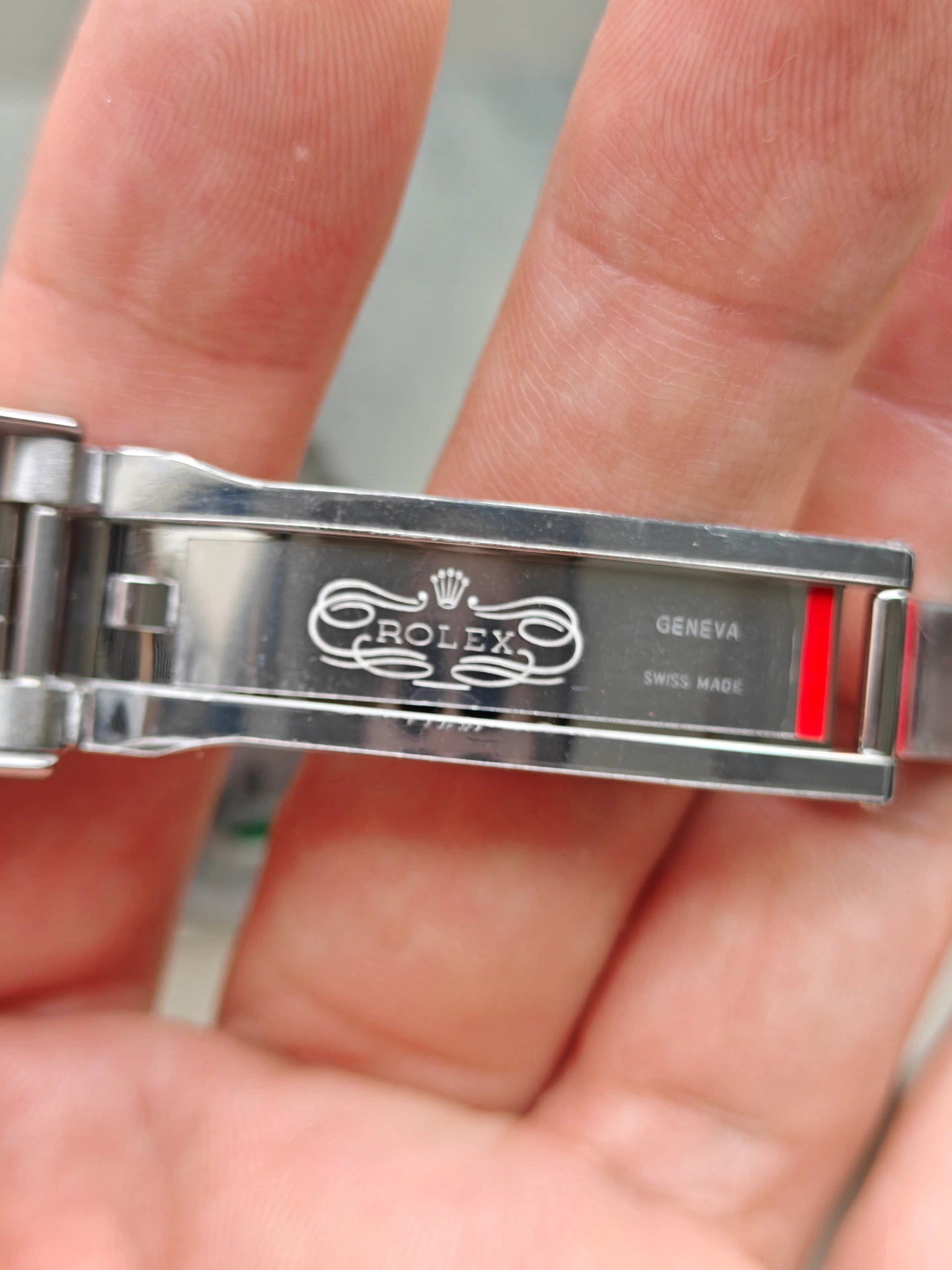
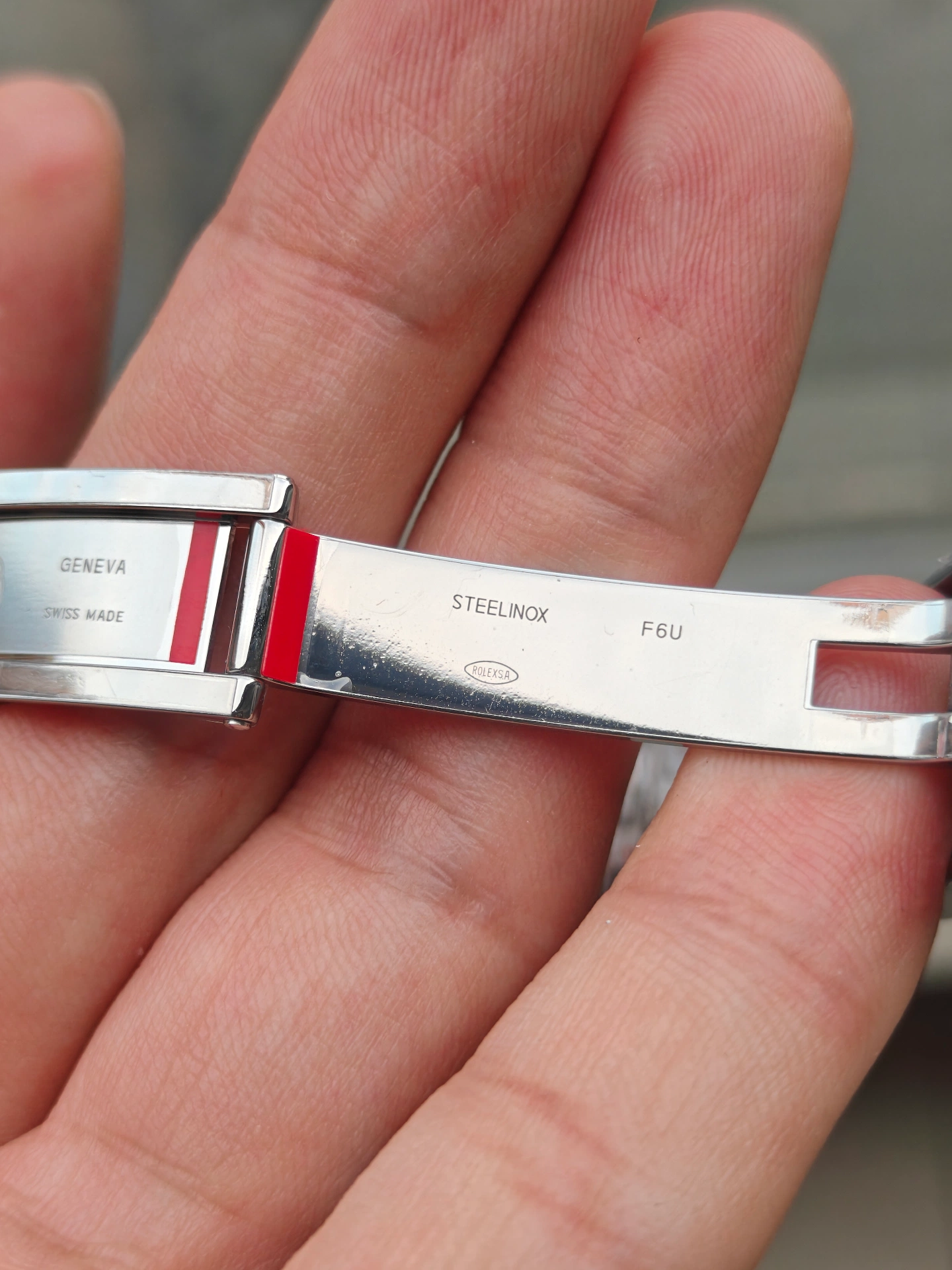
Crown Logo Engraving and Flat-Top A
After opening the clasp, inspect the internal engravings with a loupe:
- Crown logo engraving: Very clearly engraved, with well-defined contours.
- Flat-top A: The top of the letter “A” in the engraving is flat, not pointed. A flat top is correct; a pointed top is incorrect. This is an important authentication point at the clasp level and applies to both bracelet variants.
Glidelink Extension Function
Both Jubilee and Oyster versions are equipped with the Glidelink extension adjustment function:
- Three positions total, defaulting to the middle position
- Allows minor bracelet length adjustment without tools
- Operation: Locate the extension mechanism on the side of the clasp, adjust both sides simultaneously, move the bracelet link to the front/rear position, then press the mechanism back to secure after adjustment
- Authentication: The extension mechanism should smoothly switch between the three positions with clear positional feel; after adjustment it should hold firmly without slipping or moving on its own. Versions lacking the extension function or with stiff, unclear position switching should be viewed with suspicion.
Clasp and Case Back Codes
- Jubilee clasp code: Current batch A9A
- Oyster clasp code: Current batch 1NQ
- Rehaut engraving code: Current batch begins with 6X, sometimes 6W; multiple code sets exist, not identical on every watch
All codes change with production batches but do not change frequently. Do not memorize a single code for authentication — codes are only auxiliary verification items and must be combined with hard features such as crown logo, flat-top A, specifications, and bezel feel for comprehensive verification.
Dandong 3285 Movement Detailed Analysis
The VSF Pepsi is equipped with the Dandong 3285 automatic mechanical movement. After opening the case back, it can be authenticated through the following points (opening the case back requires professional tools; it is recommended to be performed by a watchmaker, not by the user).
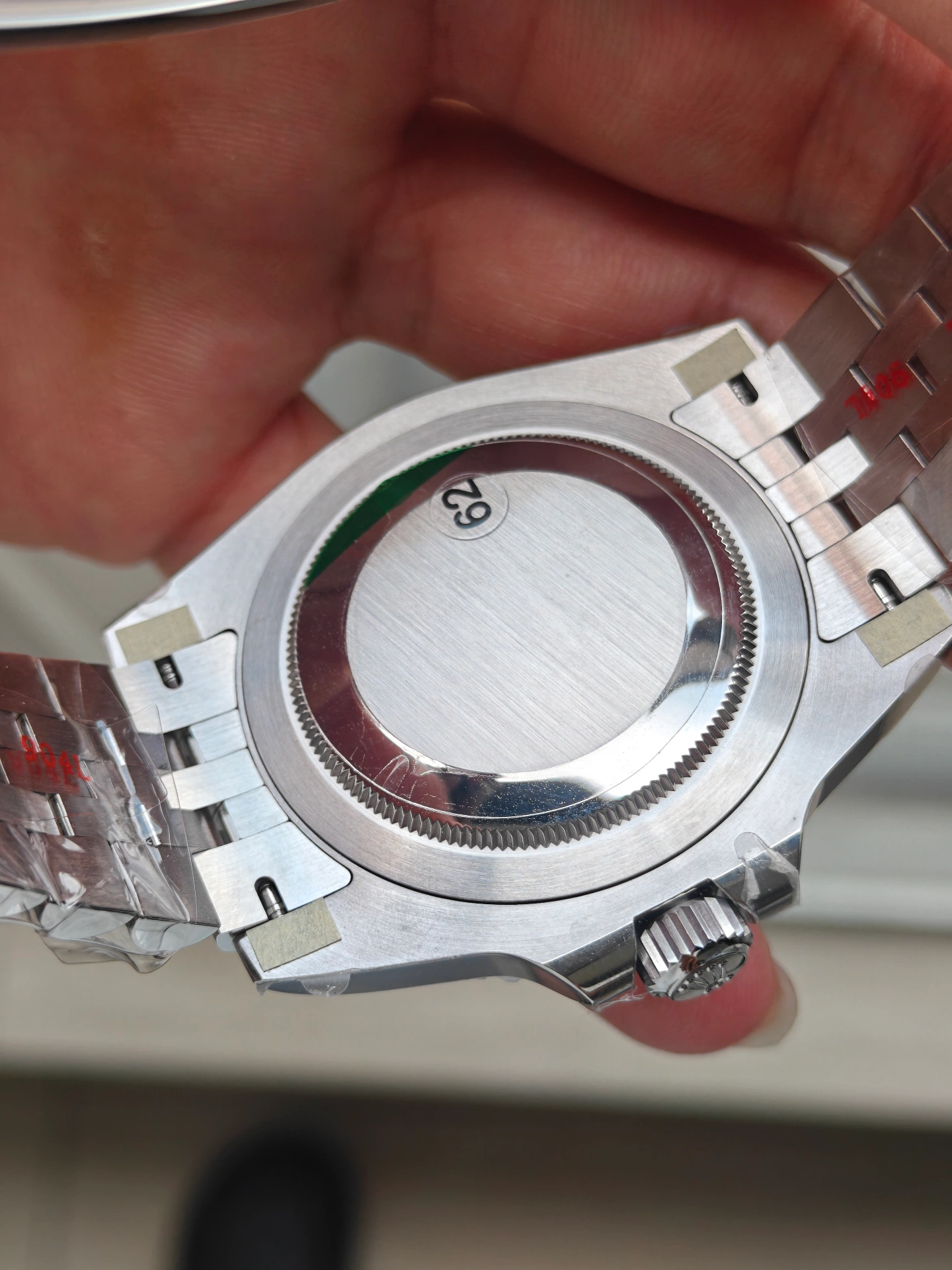
Regulator Gold Plate Position
Locate the regulator (regulating pins) on the movement. Its gold-colored plate (adjustment plate) should be on the side near the “3285” numeral. Only when the gold plate is near the 3285 numeral is it a Dandong movement; incorrect positioning should be viewed with suspicion.
Semi-Circular Area Brushed Finish
The semi-circular area near the movement’s rotor/balance wheel (semi-circular position) on the Dandong 3285 has a brushed treatment, with fine brushed texture visible. By comparison, the Shanghai 3285’s semi-circular area is smooth, with no brushed finish. This is one of the core characteristics distinguishing the Dandong 3285 from the Shanghai 3285.
Movement Engravings
The numerical position markings on the movement (such as 158, 18187, etc.) should be clear and regular, and the “3285” engraving on the rotor should likewise be clearly legible.
3A Sticker Label Explained: Number of A’s Is Unrelated to Quality
VSF’s GMT series (Pepsi, Sprite) ships from the factory with a three-A sticker label (3A mark), which is VSF’s factory labeling convention. A common misconception needs to be corrected: the number of A’s on the sticker does not represent quality grade.
- Three A’s does not mean poor quality, and five A’s does not mean better quality — the number of A’s has no relation to product quality.
- Different series have different A counts: the GMT series has three A’s, other models such as the Yacht-Master platinum may have one A, and the Daytona series conventionally uses an A sticker.
- Claims promoting higher or lower versions based on “how many A’s” constitute misleading sales tactics exploiting information asymmetry.
- Judging whether a product is genuine VSF should rely on comprehensive verification of hard indicators such as exterior specifications, bezel craftsmanship, movement characteristics, and clasp engravings — the sticker is not a basis for judgment.
Authentication Checklist Summary
The following is a multi-dimensional authentication checklist for the VSF Pepsi. It is recommended that at least 3 independent dimensions align before making a high-confidence determination:
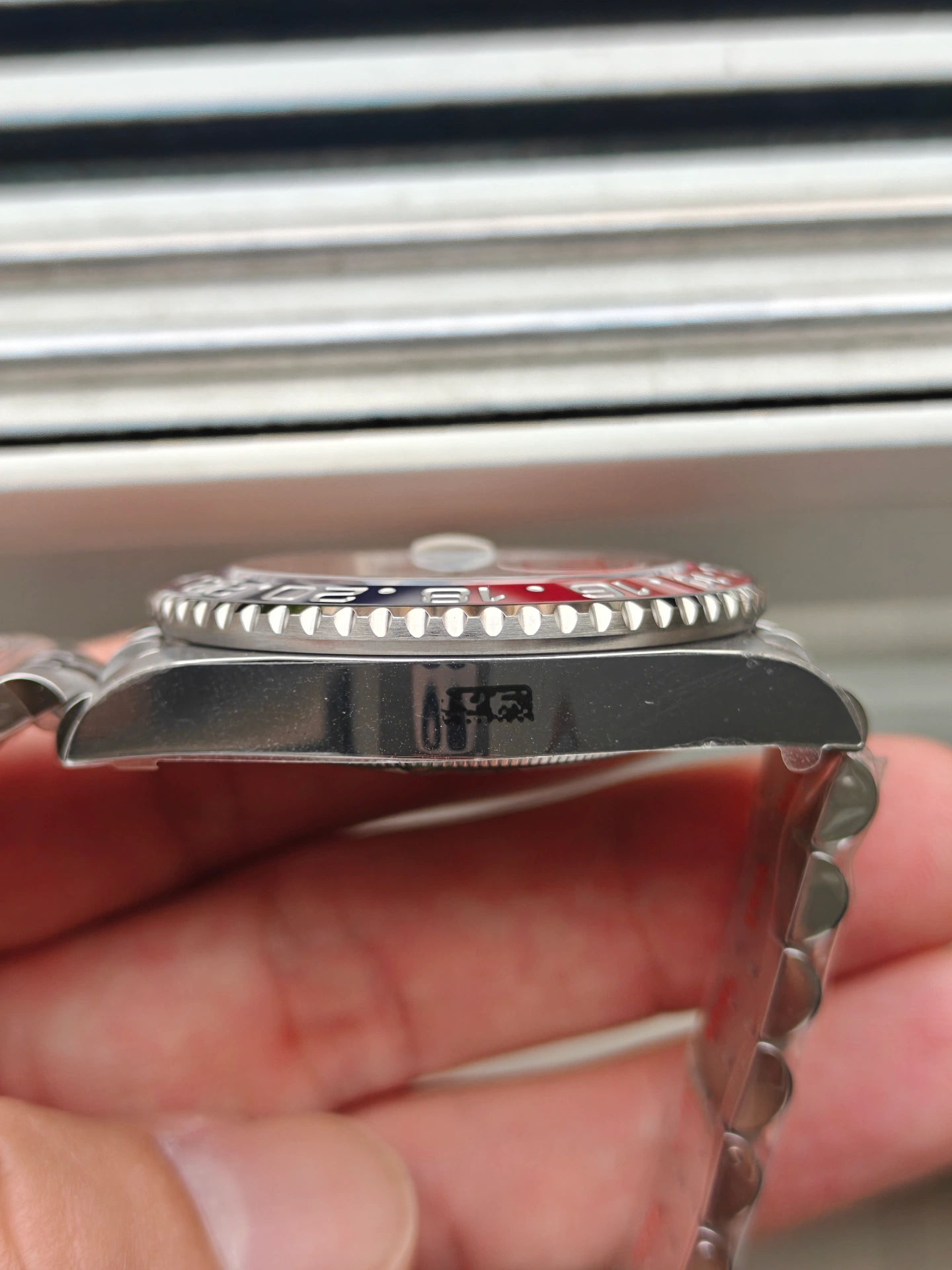
Hard indicators (must be correct):
- Case diameter 40mm, thickness 12.1–12.2mm
- Jubilee ~140g / Oyster ~150g (±2g normal tolerance)
- Bracelet-to-case junction gaps tight and uniform
Bezel (core authentication dimension):
- One-piece red-blue ceramic bezel, no seam at the color boundary
- Solid color with no light-scattering particles (no glitter under strong light)
- Cannot be rotated with one finger, distinct clicks with two fingers, bidirectional rotation
- Vivid color-shifting effect in low light
Dial:
- Solid pinion (not hollow tube)
- Crisp, sharp engravings, centered date font
- Evenly applied luminescence
Clasp:
- Both dual-opening methods function normally
- Crown logo engraving clear
- Letter A is flat-top (not pointed)
- Glidelink three-position extension smooth, firmly secured
- Codes vary by batch (current Jubilee A9A / Oyster 1NQ / rehaut 6X or 6W prefix), do not memorize
Movement:
- Dandong 3285: regulator gold plate near the 3285 numeral
- Semi-circular area has brushed finish (Shanghai 3285 is smooth)
Sticker (auxiliary item, not a quality basis):
- GMT series ships with 3A mark; A count is unrelated to quality
Frequently Asked Questions (FAQ)
What is the difference between the VSF Pepsi Jubilee and Oyster versions?
The two versions differ only in bracelet style and weight: the Jubilee has five-row links, weighs ~140g, and has a more youthful style; the Oyster has three-row links, weighs ~150g, and has a more mature style. The bezel, dial, movement (Dandong 3285), and case are completely identical, with the same quality standard. The clasp codes differ (current batch Jubilee A9A, Oyster 1NQ).
What is the standard weight of the VSF Pepsi?
The Jubilee bracelet version weighs approximately 140g, and the Oyster bracelet version approximately 150g — a difference of about 10g. A normal measurement tolerance of ±2g is acceptable. Weight is an important hard authentication indicator; significant deviation warrants suspicion, but the bracelet variant must be confirmed before weighing.
How do you authenticate the VSF Pepsi ceramic bezel?
Three core points: First, rotational feel — cannot be turned with one finger, clear “click” detents with two fingers, bidirectional rotation. Second, color purity — solid color with no light-scattering particles under strong light (lower-quality versions show glitter like pearl white paint). Third, one-piece construction — no seam at the red-blue boundary. Bezels from other factories are typically effortlessly rotatable with one finger, slide through, and have vague clicks.
What movement does the VSF Pepsi use? How is it authenticated?
It is equipped with the Dandong 3285 automatic mechanical movement. Authentication points: the regulator gold plate is on the side near the “3285” numeral; the movement’s semi-circular area has brushed texture (the Shanghai 3285 semi-circular area is smooth with no brushing); movement engravings are clear and regular. Opening the case back requires professional tools and is recommended to be performed by a watchmaker.
How do you inspect the letter A on the clasp? What is a flat-top A?
The top of the letter “A” in the clasp’s internal engraving should be flat (flat-top A), not pointed. A flat top is correct; a pointed top is incorrect. Additionally, the crown logo engraving inside the clasp should be clearly engraved. Clasp codes vary by batch — current Jubilee batch A9A, Oyster 1NQ — and should not be memorized.
Does the 3A sticker indicate poor quality?
No. VSF’s GMT series (Pepsi, Sprite) ships from the factory with a three-A sticker, which is the factory’s labeling convention and unrelated to quality. Different series have different A counts (e.g., the Daytona series uses an A sticker, other models may have one A), and the number of A’s cannot be used to judge version level or quality.
How do you operate the Glidelink extension?
The extension mechanism is located on the side of the clasp. Adjust both sides simultaneously, move the bracelet link to the front/rear position, then press the mechanism back to secure. There are three positions total, defaulting to the middle, allowing minor bracelet length adjustment without tools. A genuine extension switches smoothly, has clear positional feel, and does not slip after securing.
Conclusion
The core advantage of the VSF Pepsi GMT-Master II 126710 BLRO is concentrated in ceramic bezel craftsmanship — one-piece firing, solid impurity-free color, and the one-finger-immovable detent resistance. This is an experience gap that other top-tier factories, despite similar exterior specifications, still struggle to replicate. The Dandong 3285 movement can be distinguished from the Shanghai 3285 through regulator position and semi-circular area brushing. The two bracelet variants (Jubilee 140g / Oyster 150g) are of consistent quality, differing only in wearing style. Authentication should rely on multi-dimensional comprehensive verification of hard indicators such as weight, bezel feel, solid pinion, flat-top A, and movement characteristics; sticker A count and clasp codes serve only as auxiliary references.
This article is for replica watch technical review and knowledge sharing only. All content is based on public information and hands-on observation and does not constitute any purchase recommendation. Replica watches involve intellectual property issues; readers are advised to exercise their own judgment and comply with relevant laws and regulations.